
advocacy
at dcnoma
Building civic power, protecting communities, and advancing equity through design.
DCNOMA’s advocacy work centers the voices of designers, students, and communities across the DMV. As a chapter of over 200 members, we are developing an advocacy agenda that reflects the issues impacting our profession and the communities we serve.
Our work connects local priorities in Washington, DC with national conversations led by NOMA and the AIA—ensuring that our voices are represented at every level, from our neighborhoods to Capitol Hill.
Help Shape DCNOMA’s Advocacy Agenda
Your voice matters. This survey will directly inform how DCNOMA advocates,
where we focus our energy, and how we show up for our communities.
DCNOMA is committed to advancing policies and practices that create a more equitable, inclusive, and just future for our communities and the built environment.
Our Advocacy Priorities

Rooted in DC
Housing, Small Business, and Cultural Anti-Displacement
We are committed to protecting long-time residents, legacy small businesses, and cultural spaces from displacement through policies and design practices that support housing stability, community ownership, and cultural preservation.

Power at the Polls
Civic Participation and Voter Mobilization
We aim to strengthen civic engagement within the design community by supporting voter access, informed participation, and equitable civic spaces—while affirming DC statehood as a core equity issue.

Borders and Belonging
Immigration Justice and Visa Equity
We advocate for fair and inclusive immigration and visa policies that impact the design workforce and the broader community, while protecting the rights and dignity of immigrant designers and residents.
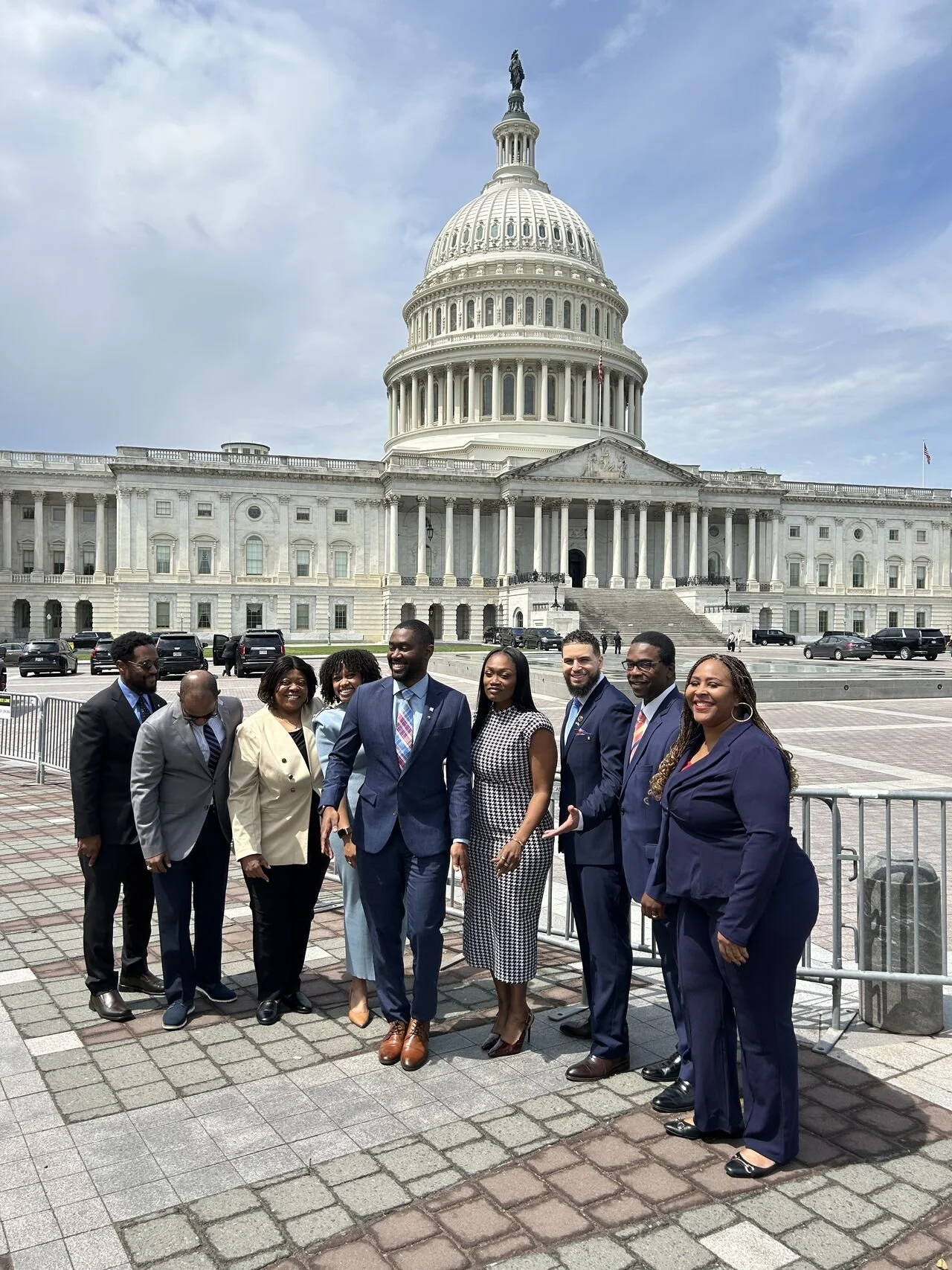
ADVOCACY IN ACTION
DCNOMA on the Hill
DCNOMA president participated in advocacy efforts on Capitol Hill alongside NOMA National and partners across the country, engaging with members of Congress on issues impacting our profession and communities. These discussions focused on housing and neighborhood investment, including affordability, anti-displacement, and cultural preservation.
We also advocated for equity in public procurement to expand access for small and minority-owned firms, supported the recognition of architecture as a professional degree, and emphasized the importance of protecting DEI initiatives, advancing design justice, and strengthening immigration and workforce equity.
Finally, we reinforced the need to preserve design freedom in public architecture, ensuring communities and designers can shape spaces that reflect cultural and regional identity.
POLICY SNAPSHOT
What We’re Advocating For
Our advocacy priorities reflect both local DC issues and national policy conversations shaping the future of the profession.

Supporting policies that protect long-time residents, preserve cultural identity, and promote equitable neighborhood development across DC.
Housing Stability and Anti-Displacement

Support for Small, Minority-Owned Firms
Expanding access to public contracts by addressing systemic barriers in procurement, including experience requirements and fee structures.

Advocating for policies that sustain and strengthen diversity, equity, and inclusion efforts within the design profession and beyond.
Protection and Advancement of DEI Initiatives

Supporting federal policies that protect educational pathways and ensure access to funding for future architects.
Recognition of Architecture as a Professional Degree

Preserving the ability for architects and communities to design buildings that reflect cultural, regional, and contextual identity.
Design Freedom in Public Architecture

Supporting fair and inclusive immigration and visa policies that strengthen the diversity and global reach of the design workforce.
Immigration and Workforce Equity

Advocating for full representation and equitable investment in Washington, DC through statehood and civic policy reform.
DC Statehood and Civic Representation
GET INVOVLED
Get Involved in DCNOMA Advocacy
Advocacy is a collective effort. Whether you are a student, emerging professional, or firm leader, your voice and participation are essential to shaping the future of our profession and our communities.
“
Advocacy is not separate from design—it is design.