
Richmond National Slavery Museum
SmithGroup
CULTURAL / MUSEUM / MEMORIAL
PROJECT OVERVIEW
Uncovering What Was Buried
The Richmond National Slavery Museum is envisioned on the historic site of Devil’s Half Acre—once one of the most active slave trading complexes in the United States. Hidden for decades beneath infrastructure and development, the site’s history was largely erased from public awareness until archaeological discoveries in the early 2000s brought it back into view.
Designed by SmithGroup in collaboration with historians, archaeologists, and artists, the museum transforms this ground into a place of truth, remembrance, and education. The project confronts a difficult past while creating space for reflection, dialogue, and deeper understanding of the enduring impact of slavery.
More than a museum, it is a memorial—grounded in place, history, and community vision.
Where history is revealed. Where truth is made visible.

THE ARCHITECTURAL PROJECT
Designing to Reveal, Remember, and Reconnect
The design of the Richmond National Slavery Museum is rooted in the act of uncovering—both physically and metaphorically. The concept lifts the earth to expose the hidden history of Devil’s Half Acre, transforming a once-buried site into a visible and meaningful landscape of memory.
The architecture creates a carefully sequenced visitor journey. Entry begins through a narrow passage that evokes confinement and oppression, guiding visitors into a reflective experience that acknowledges the realities of slavery. A shallow water crossing references the Middle Passage, introducing a moment of pause and contemplation.
From there, the experience transitions upward—leading visitors into spaces of knowledge, research, and reconnection. The genealogy and research center serves as a place to engage with ancestral histories, linking personal narratives to broader national and global contexts.
The tilted architectural form rises between the surrounding infrastructure, offering views toward the African Burial Ground, the James River, and the Virginia State Capitol—physically reconnecting the site to its historical and civic context.
Surrounding landscapes extend the experience beyond the building, incorporating water gardens that reference Shockoe Creek and quiet spaces that invite reflection within the community.
Architecture as revelation—bringing buried history into light.
ARTIST INTERPRETATION
Truth Carved in Memory
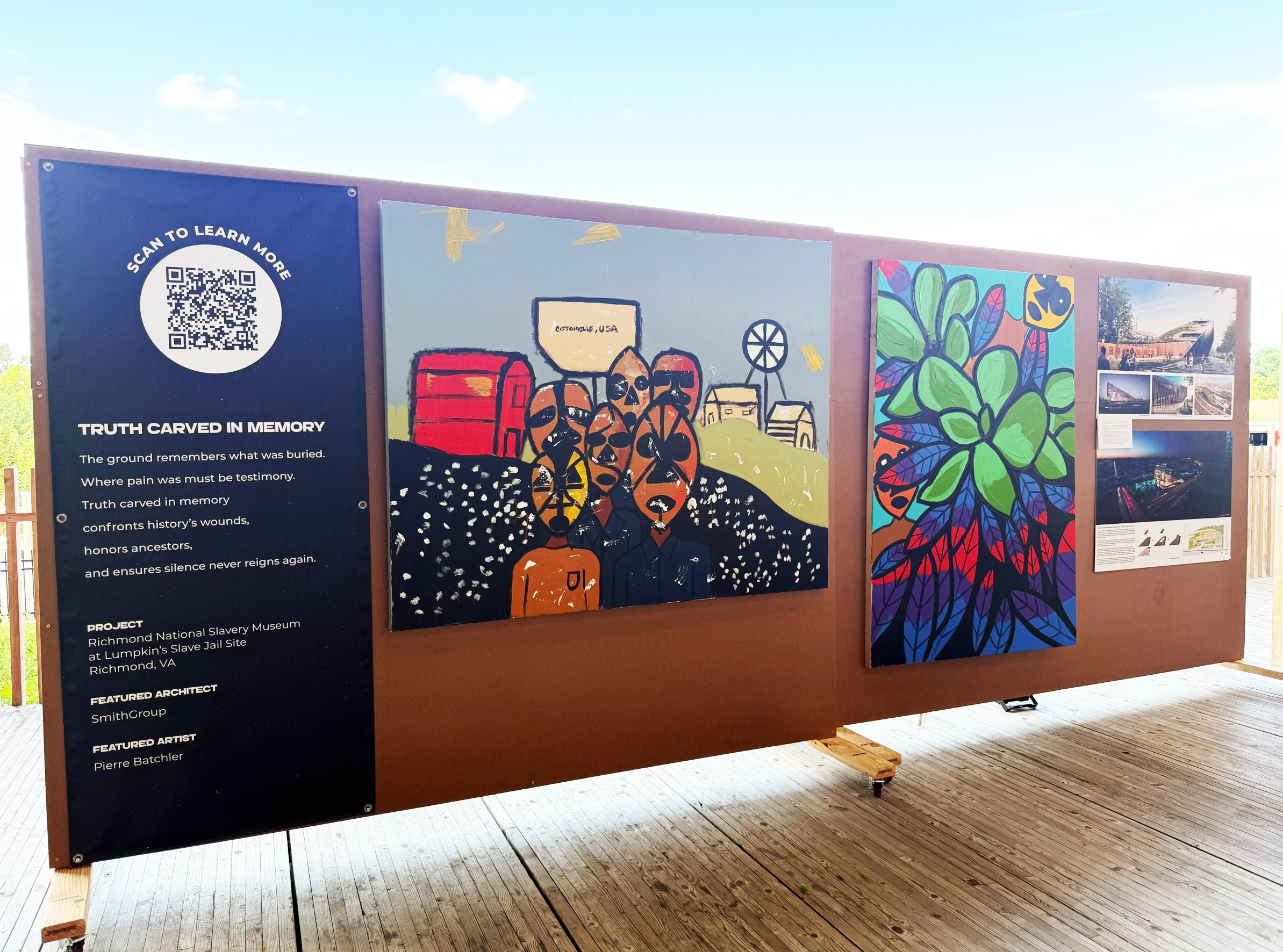
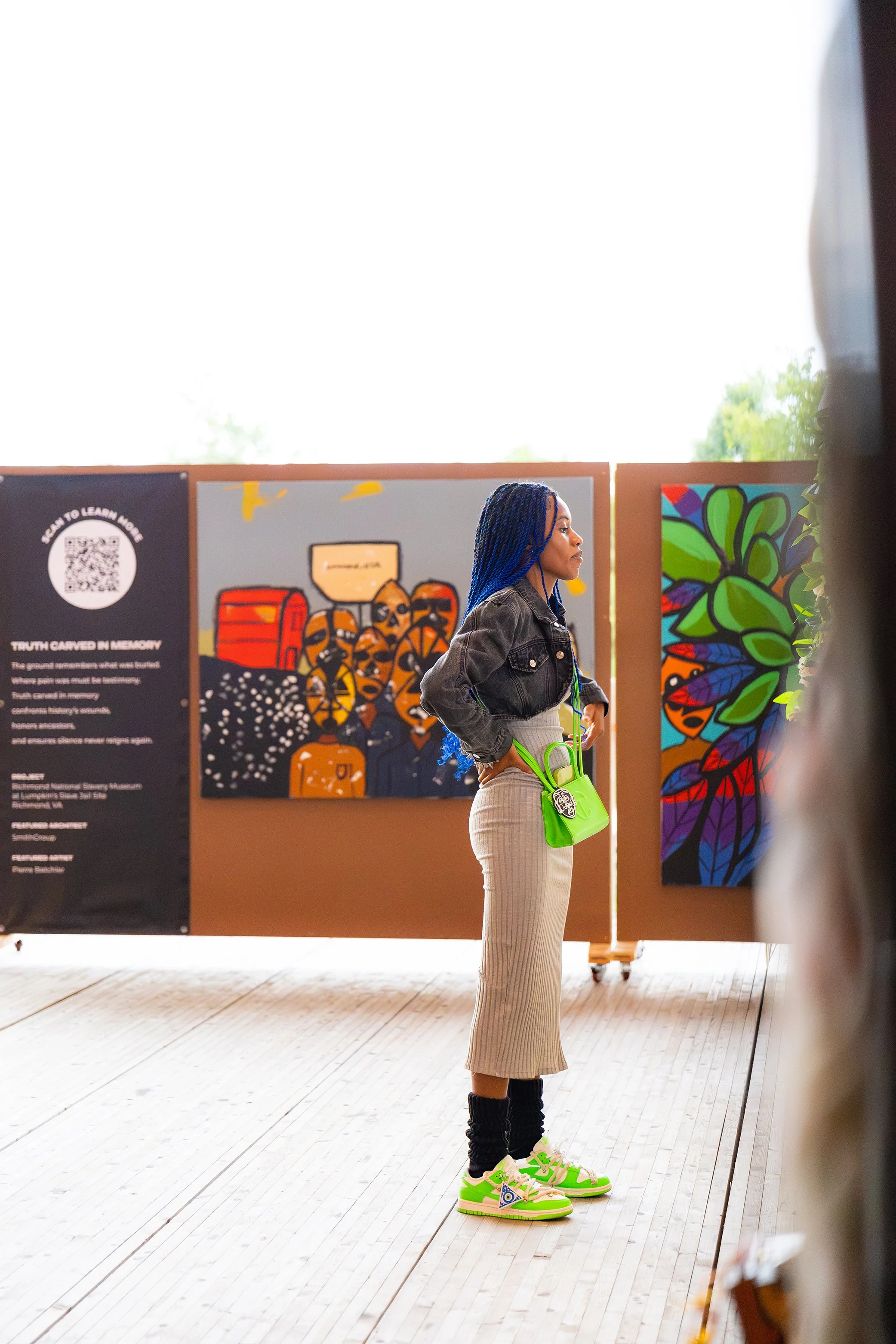
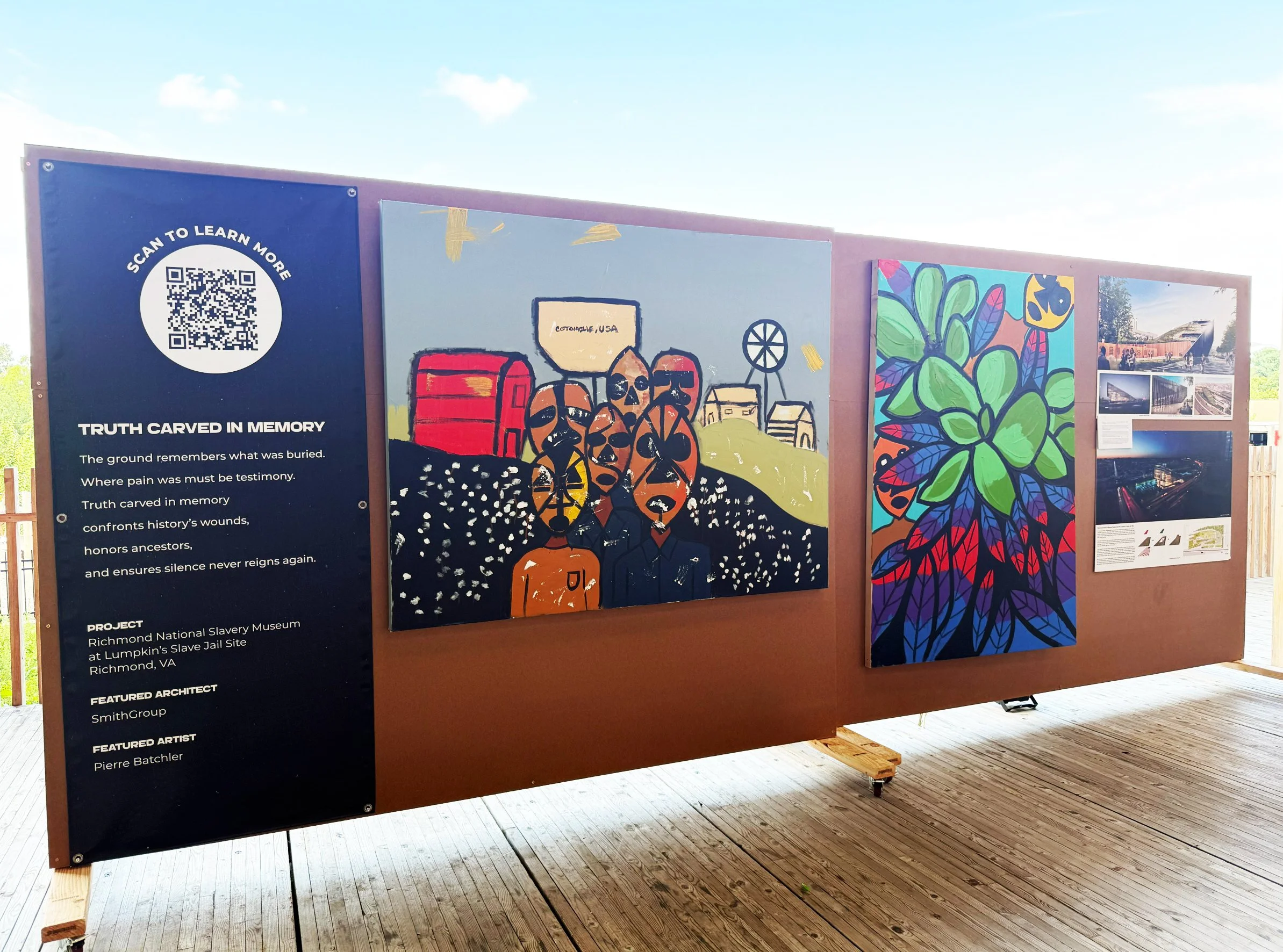
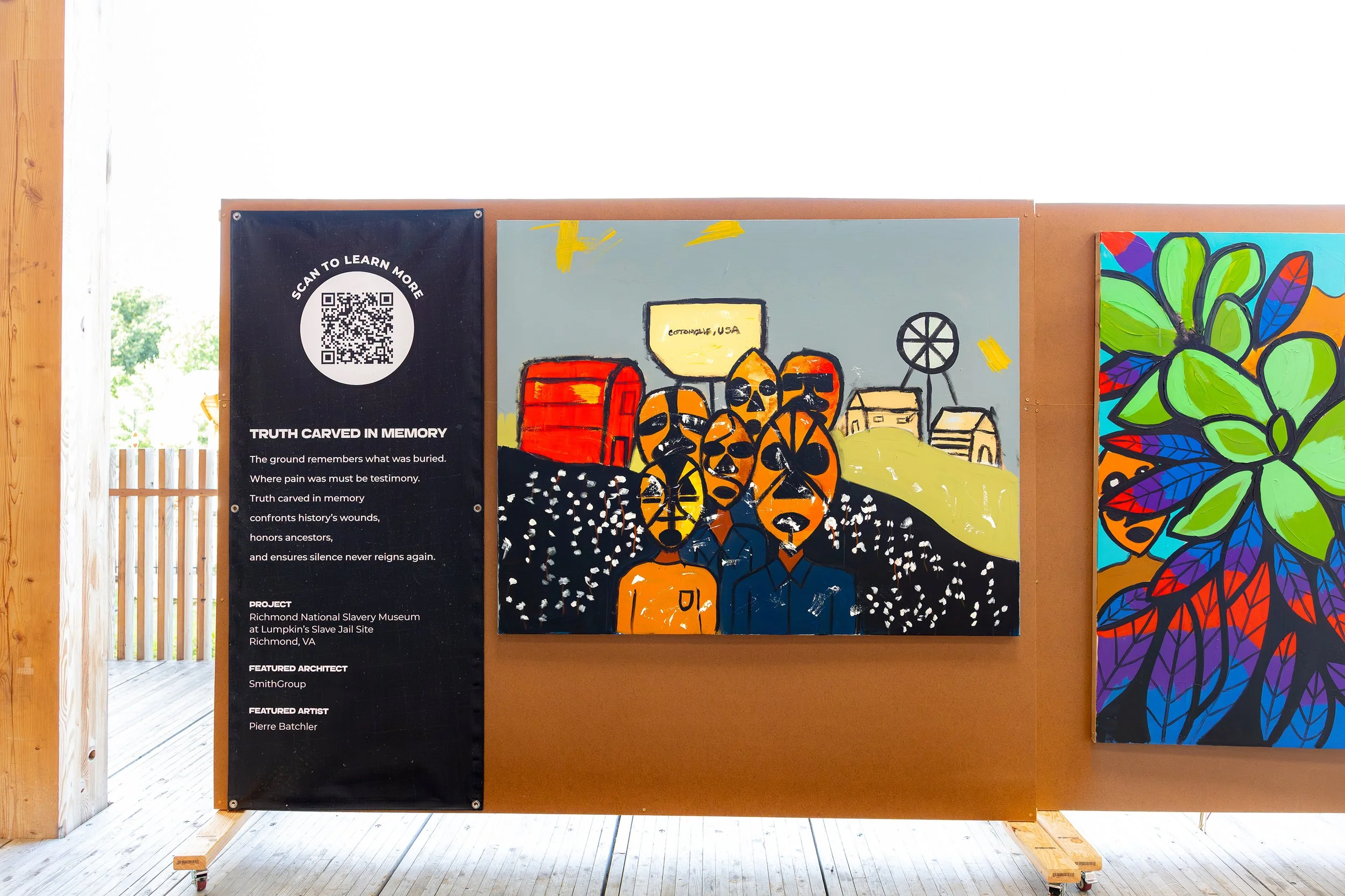
“Truth Carved in Memory” confronts the buried history of Devil’s Half Acre through bold, symbolic portraiture and vivid color. Pierre Batcheler’s work brings forward the presence of those whose lives were erased, using layered faces and collective figures to represent both individuality and shared experience.
The composition is intentionally direct—figures face the viewer, refusing invisibility. Their expressions, simplified yet powerful, evoke resilience, pain, and endurance. Surrounding elements—landscape fragments, structures, and abstract forms—anchor the work in place, referencing the physical and historical reality of the site.
Color plays a critical role, contrasting vibrancy with weight, suggesting both life and loss. The work does not soften history—it makes it visible. It transforms absence into presence, ensuring that what was once hidden is now seen and acknowledged.
Positioned alongside architectural imagery, the artwork bridges past and present—connecting the historical site to its contemporary interpretation.
The ground remembers.
The faces return.
The truth remains.
THE COLLABORATION
Where Architecture and Art Intersect
The collaboration between SmithGroup and artist Pierre Batcheler transforms the Richmond National Slavery Museum into a layered experience of revelation and remembrance. Architecture and art work in tandem—one uncovering the physical history of the site, the other restoring its human presence.
Architectural drawings and visual documentation anchor the installation in the real conditions of Devil’s Half Acre, while Batcheler’s expressive portraits bring forward the lives and identities connected to that history. Together, they create a dialogue between structure and story—between what is built and what is remembered.
The installation reflects the core concept of the project: uncovering what has been hidden. It ensures that history is not only interpreted, but made visible, personal, and undeniable.
A shared vision—revealing history through design.
Richmond National Slavery Museum
PROJECT DETAILS
Cultural / Memorial Museum
FIRM
SmithGroup
ARTISTS
Pierre Batcheler

THEME
Memory, Truth & Reckoning
YEAR
2025