
The Spaces We Carry: Khmer Heritage and the Architecture of Migration
The last time I went to Cambodia I was five years old, holding my grandfather’s hand. In 2025, I returned to bring him home for the last time.
Growing up in a Dominican and Cambodian immigrant household — the daughter and granddaughter of refugees — shaped how I understand space, belonging, and the built environment long before I ever set foot in a design studio. After my grandfather passed in 2025, our family carried his ashes back to Batheay, the rural town in Kampong Cham province where he was born. The dirt path to Wat Kiribopharam was exactly what it sounds like — unpaved, quiet, worn smooth by generations of bare feet. His older brother, nearly 85 years old, still rides his bicycle there.
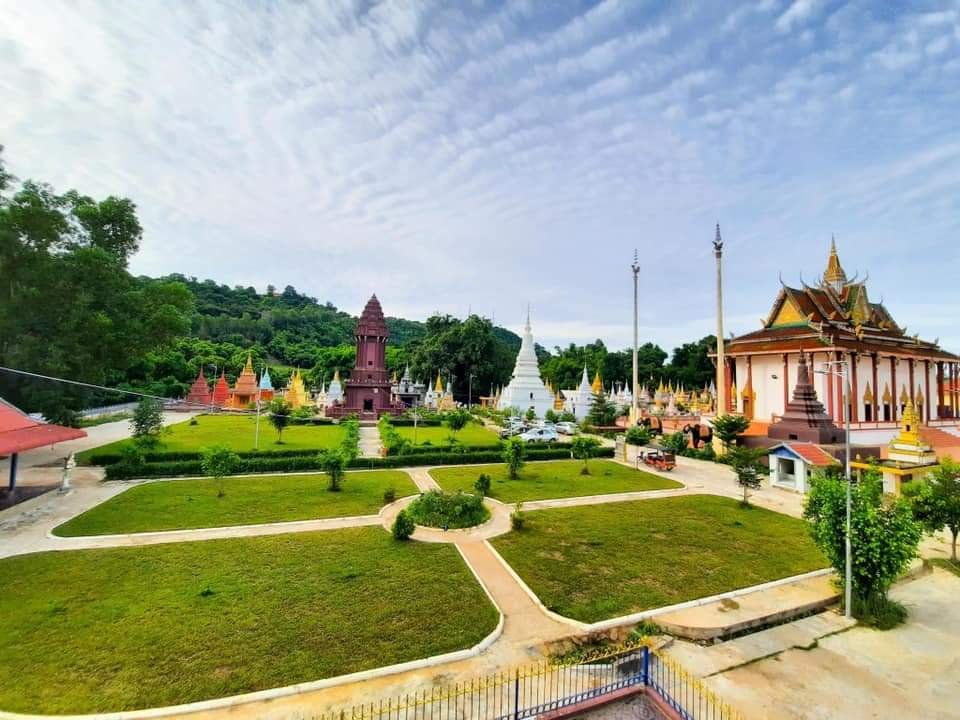
Wat Kiribopharam | Batheay, Cambodia
Most visitors to Cambodia follow a different road. The ancient temple complexes of Angkor Wat in Siem Reap — a UNESCO World Heritage Site — draw busloads of tourists to marvel at the geometric precision and cosmic symbolism of Khmer imperial architecture at its peak. I made that stop too, and climbed the steps of Phnom Udong Mountain to reach Oudong Temple, another UNESCO site beloved by locals but largely unknown to international tourists. Standing at the summit, looking out over a landscape that served as Cambodia’s royal capital from 1618 to the mid-1860s, I felt the weight of a history most of the world has never been asked to know. But it was the dirt path to Batheay that stayed with me.
At the center of that landscape stood the wat — the wat was never only a place of worship. In rural Cambodia, the temple functioned as school, shelter, keeper of cultural memory, and community anchor. When families traveled far for agricultural work, their children were taken in by the local temple. My grandfather himself practiced as a monk at Wat Kiribopharam for a time — a common rite of passage for young Khmer men, one that embedded in him a deep spatial and spiritual knowledge of what it means for a building to hold a community. That knowledge would travel with him across the world.
During Pchum Ben, the fifteen-day festival in which Cambodians bring food offerings to temples for the spirits of the ancestors, the wat becomes more than institution. It becomes the place where the living and the dead remain in relationship. When we placed my grandfather’s ashes in the stupa at Wat Kiribopharam, where generations of ancestors are honored, I understood what it meant to visit an ancestral ground that echoes heritage in such a quiet and sacred way. It’s is not visiting a building. It’s about maintaining a connection no displacement could ever fully severe.
Architecture, at its most essential, is not about form. It is about what endures.
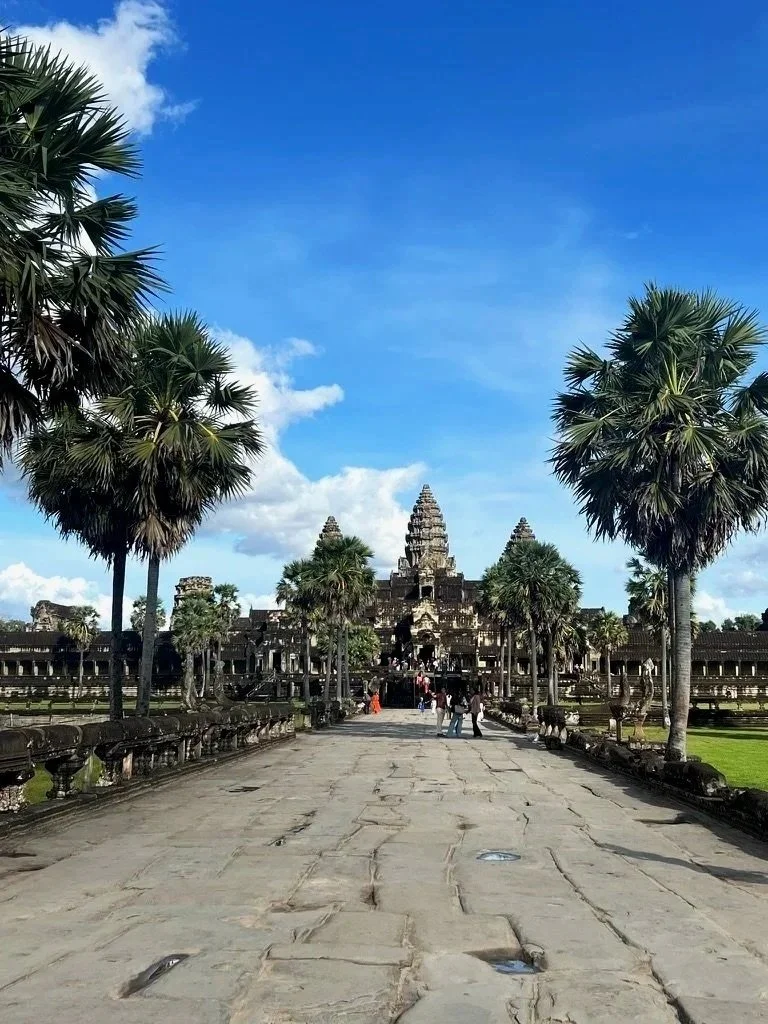
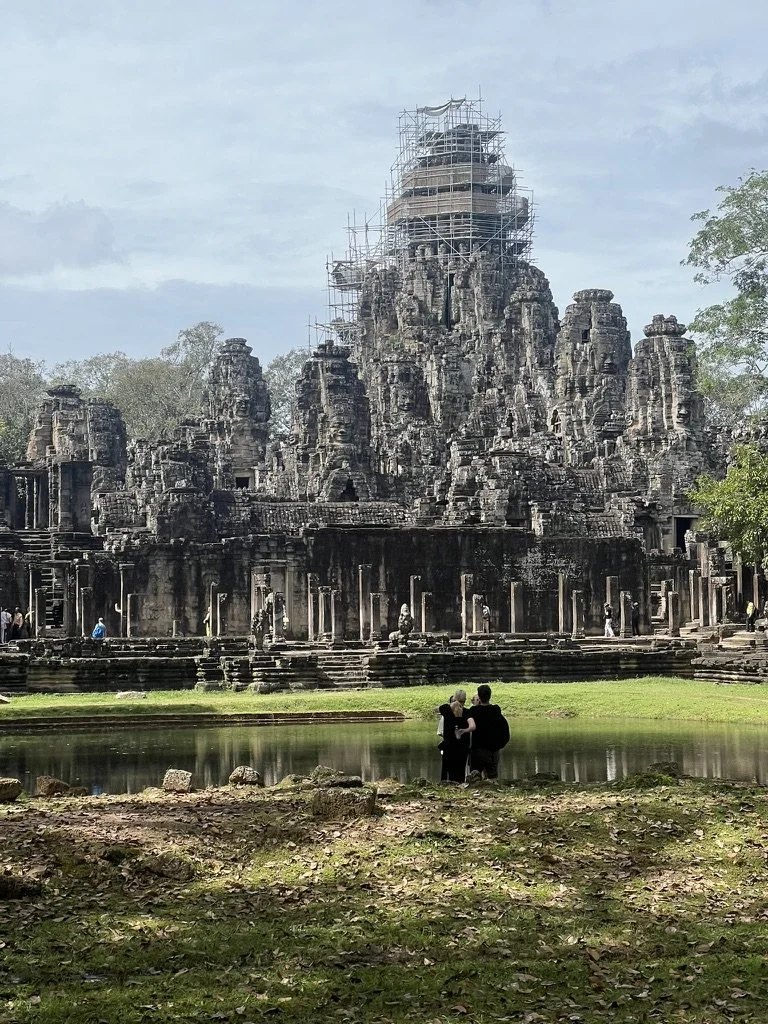
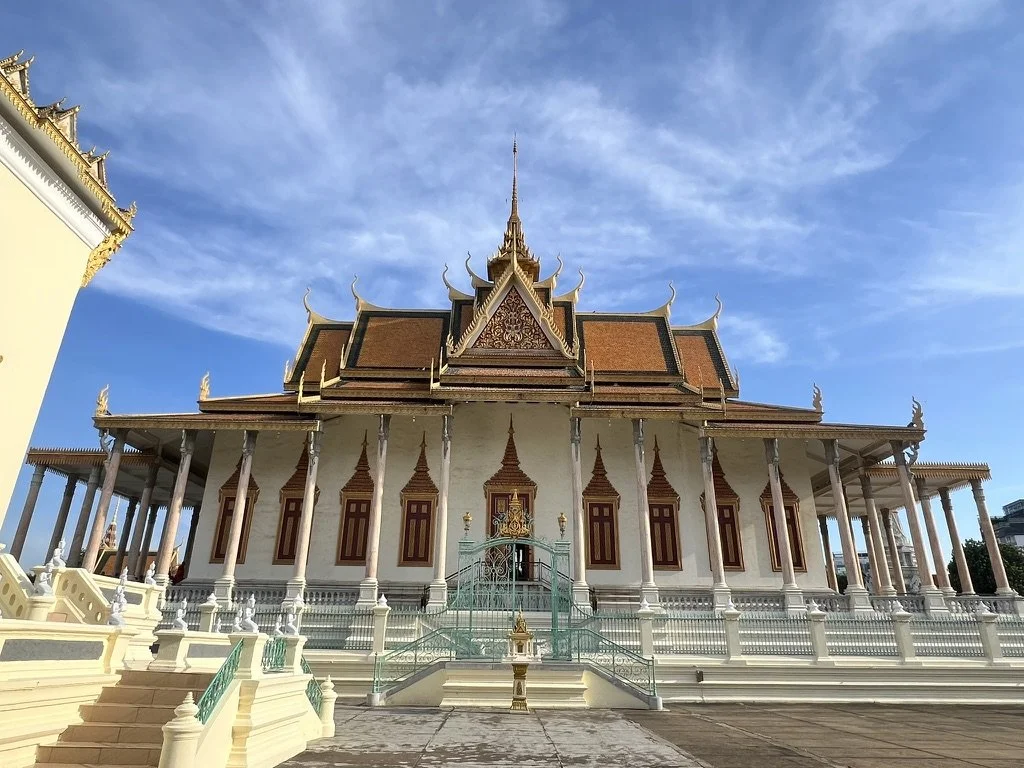
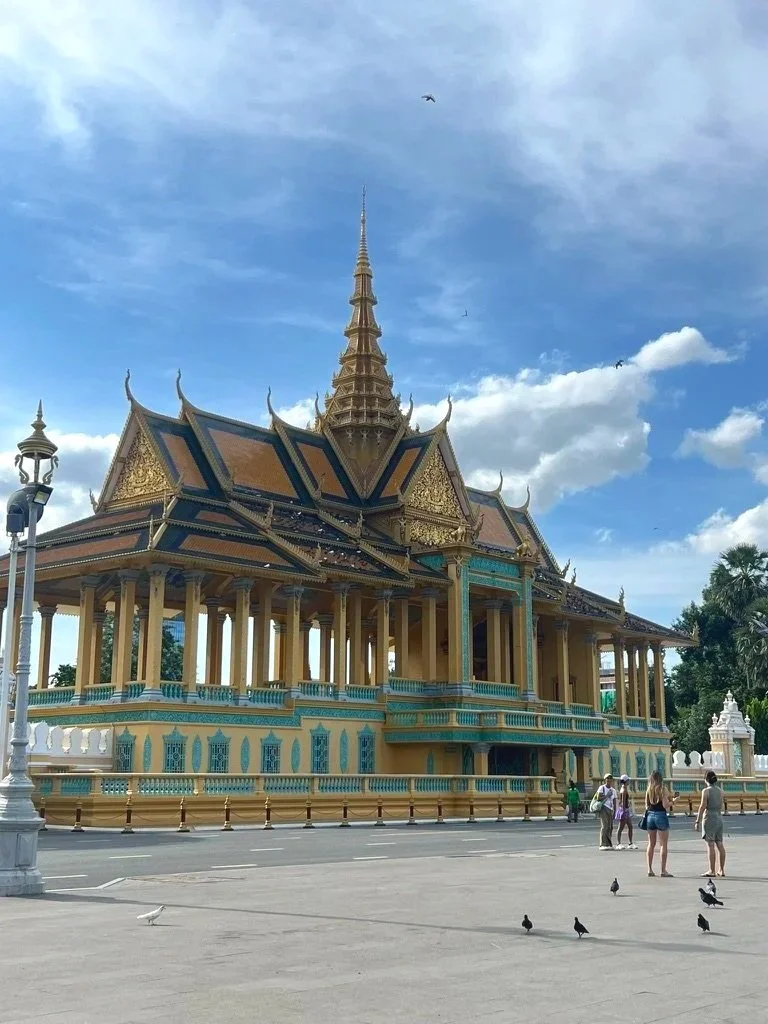
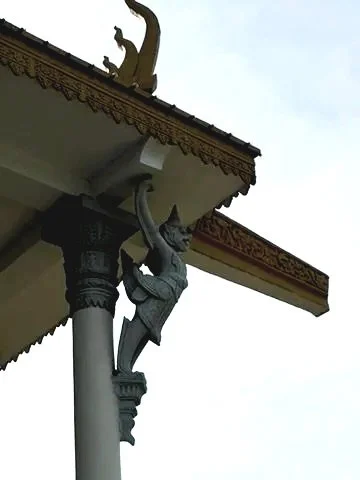
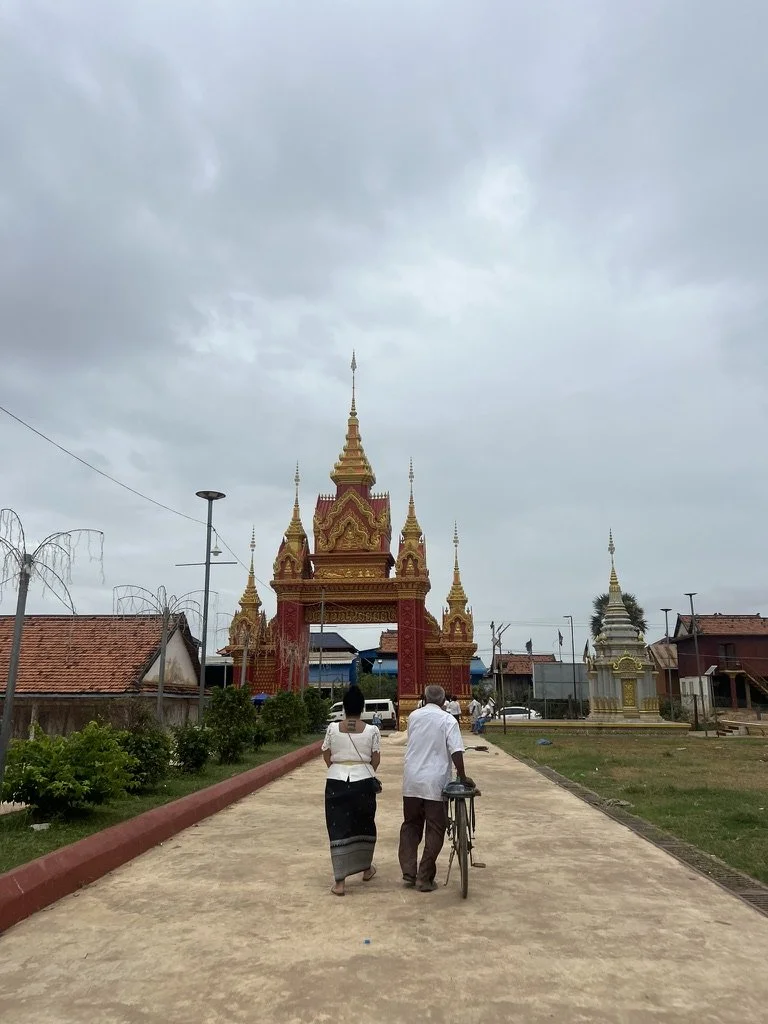
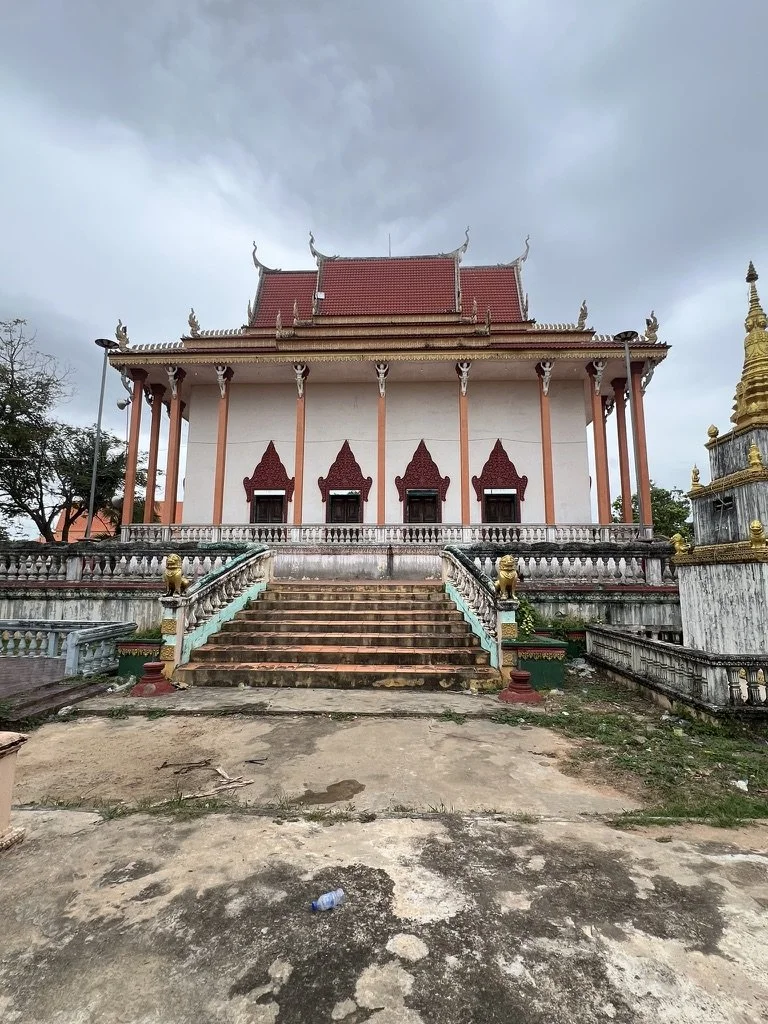
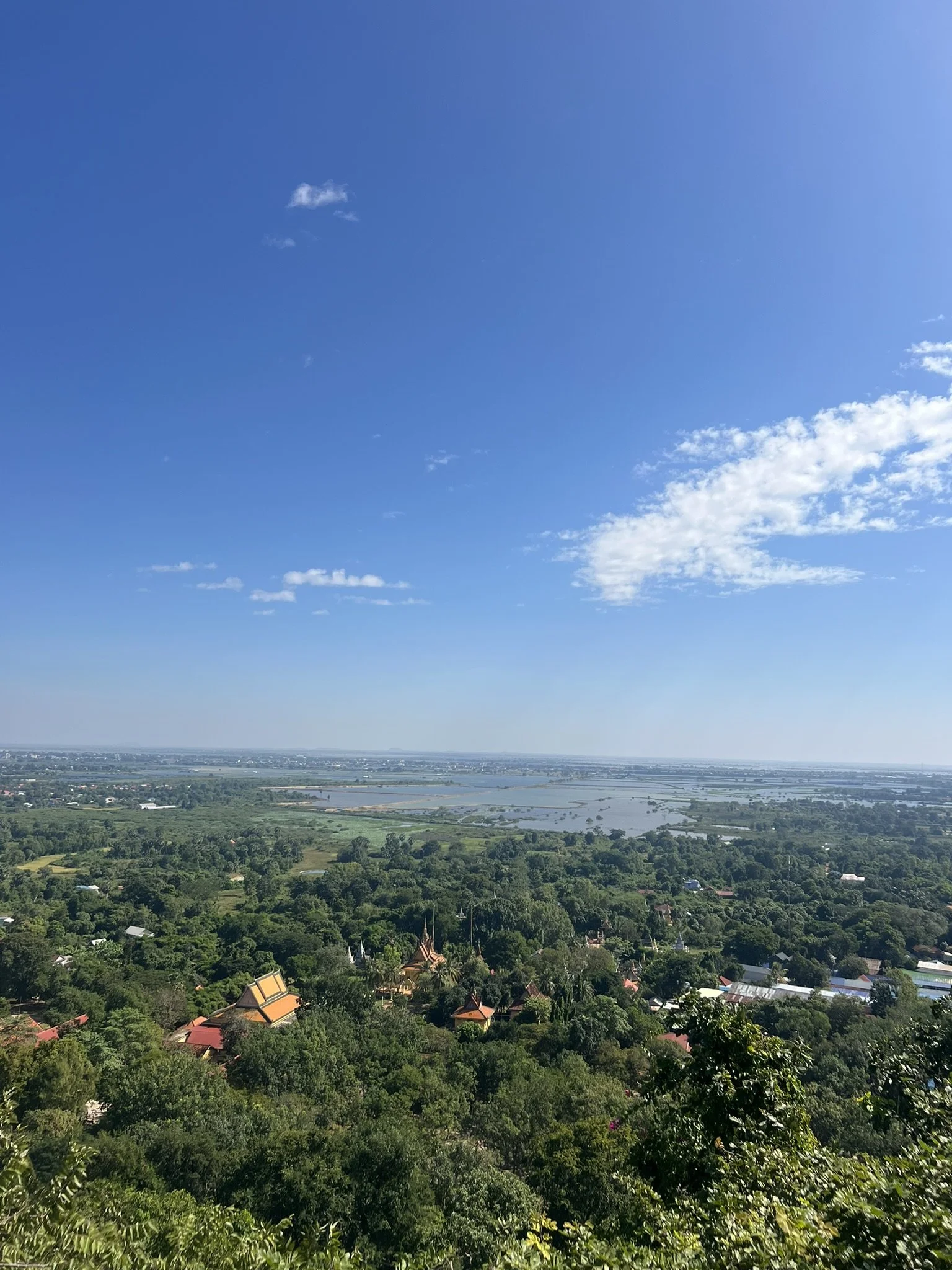
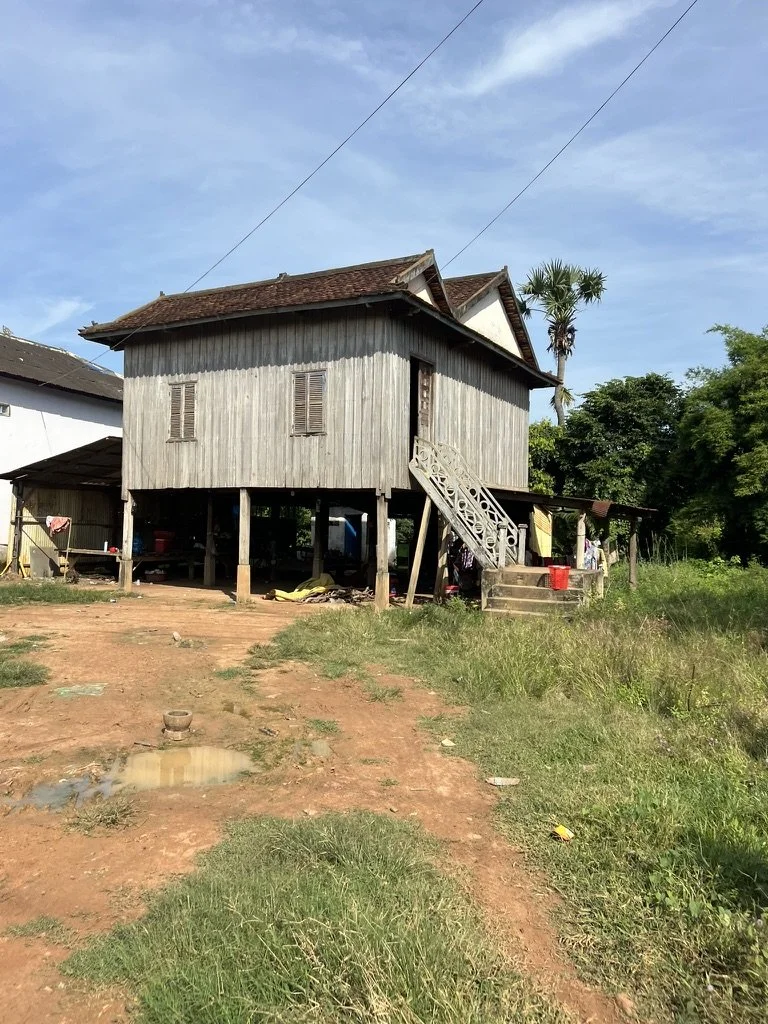
What the monumental cannot tell you, the vernacular holds.
The rural built environment of Kampong Cham is its own kind of architecture. Homes elevated on timber stilts above the floodplain, oriented to catch cross-ventilation through the wet season heat. Rainwater collected from pitched roofs. Kitchen gardens, chickens in the yard, fresh produce from the local market. Rice fields tended by families whose relationship to land was entrenched in the very way they built — low, flexible, close to water, open to community. This is not incidental vernacular. It is a sophisticated environmental response developed over centuries, as deliberate in its logic as anything studied in a design school curriculum. It simply goes unnamed.
Nearly 150,000 Cambodians came to the United States between 1979 and 1989 after surviving a genocide that claimed approximately 1.7 to 2 million lives. The trauma was not only human — it was architectural. The Khmer Rouge dismantled the institutions of Cambodian civil life: schools, temples, markets, hospitals. They targeted the very people who carried the technical and cultural knowledge of how Cambodian space was made. What arrived in the United States was not simply a refugee population. It was a civilization attempting to reconstruct itself from memory.
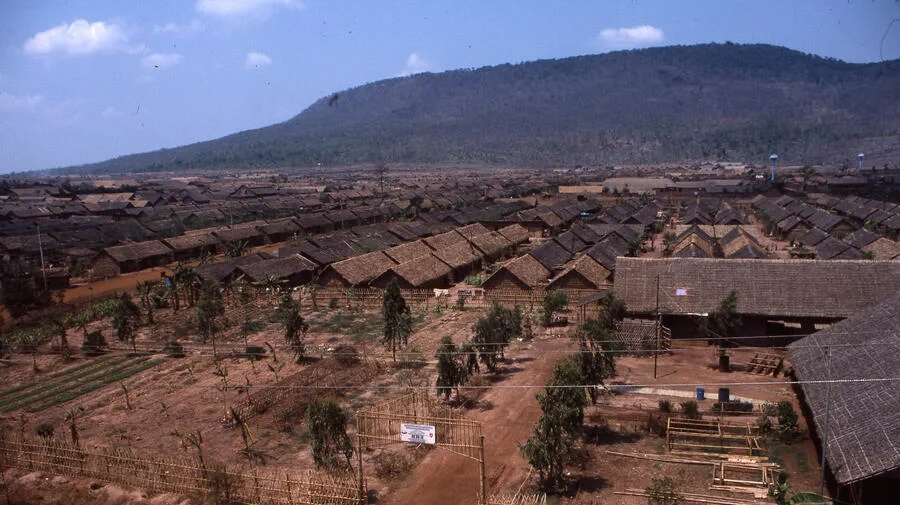
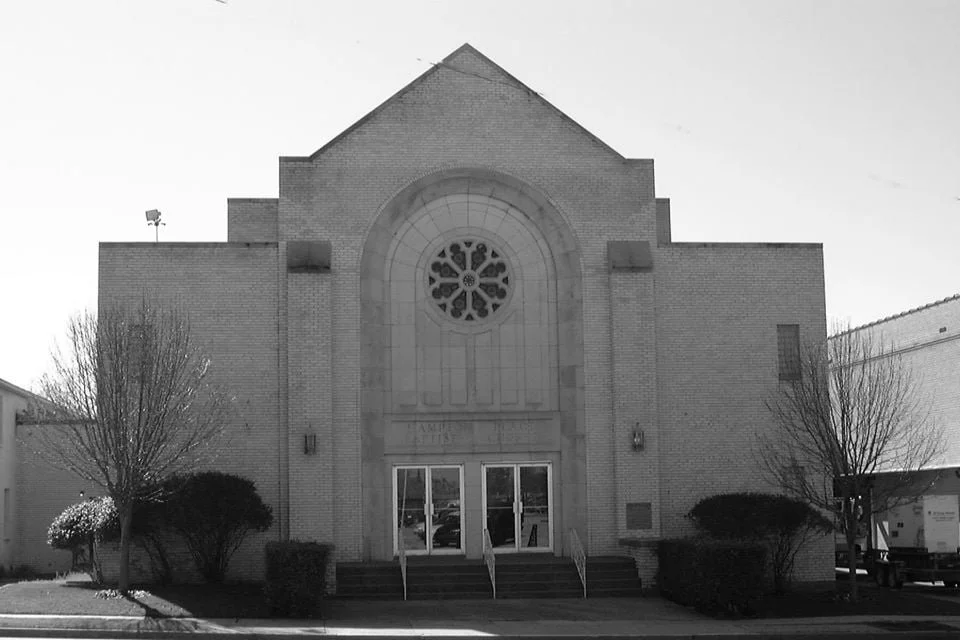
My grandfather’s journey followed that arc. After receiving refugee status around 1985 — my mother having been born in one of the Thai border camps at Khao-I-Dang as the family fled — my grandparents were sponsored by the Hampton Place Baptist Church in Dallas, Texas, then moved to Providence, Rhode Island, then to Utica, New York, then back to Providence. A pattern of secondary migration common among Cambodian refugees seeking community and proximity to relatives.
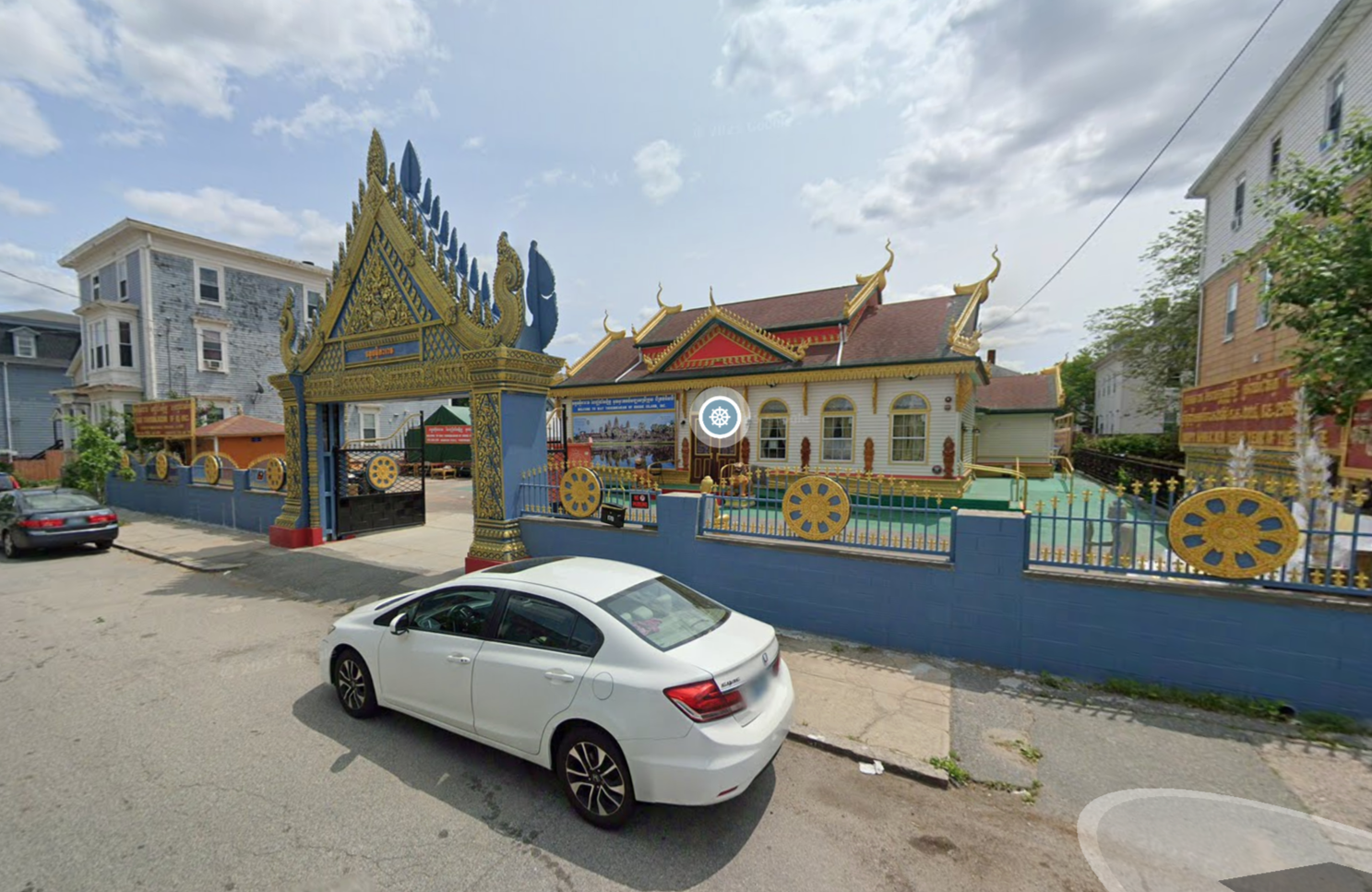
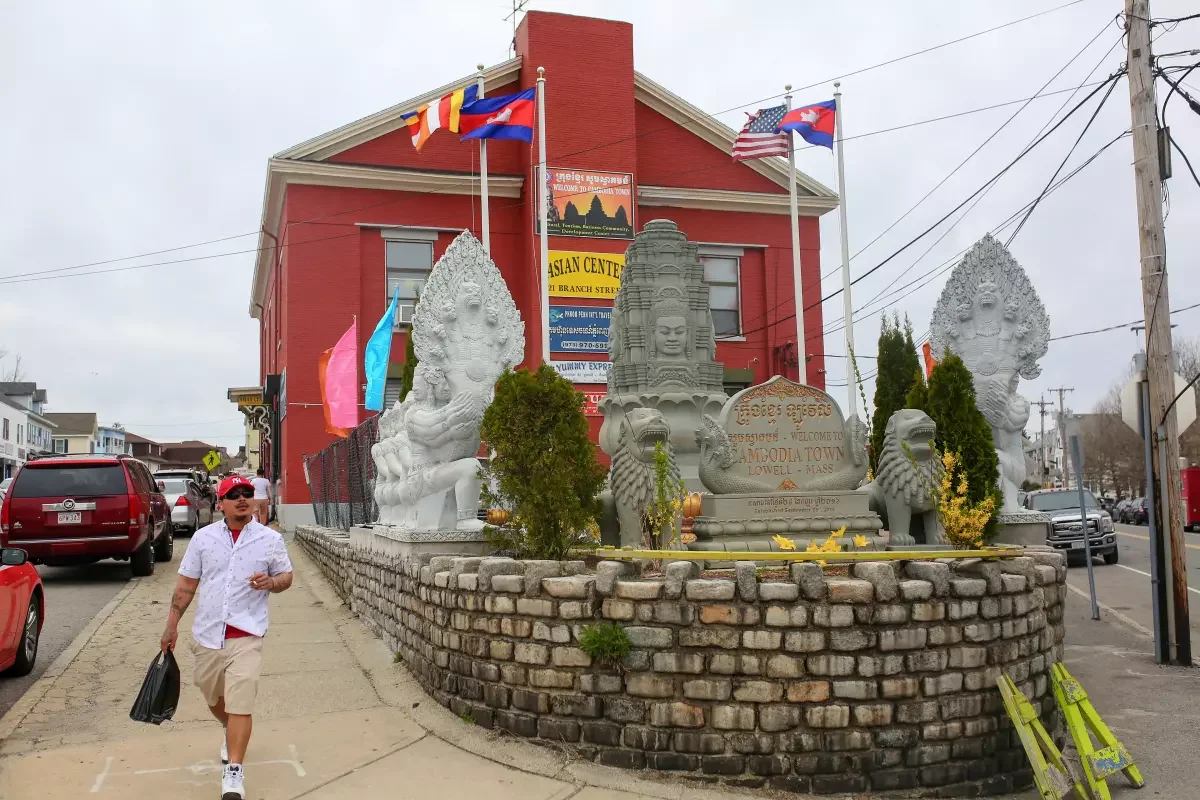
In Providence, like Lowell, the diaspora began to build. Not with institutional resources, but with what they had — existing American structures adapted and ornamented to carry Khmer spatial and cultural memory. Modest residential properties transformed: rooflines altered, facades adorned with tiered forms, lotus motifs, and naga balustrades of Cambodian temple architecture. A single-story house in a Providence neighborhood becomes, with the right detailing, a place where the spiritual geography of Southeast Asia is legible to those who know how to read it. This is not decoration. It is architectural resistance — a refusal to be spatially erased.
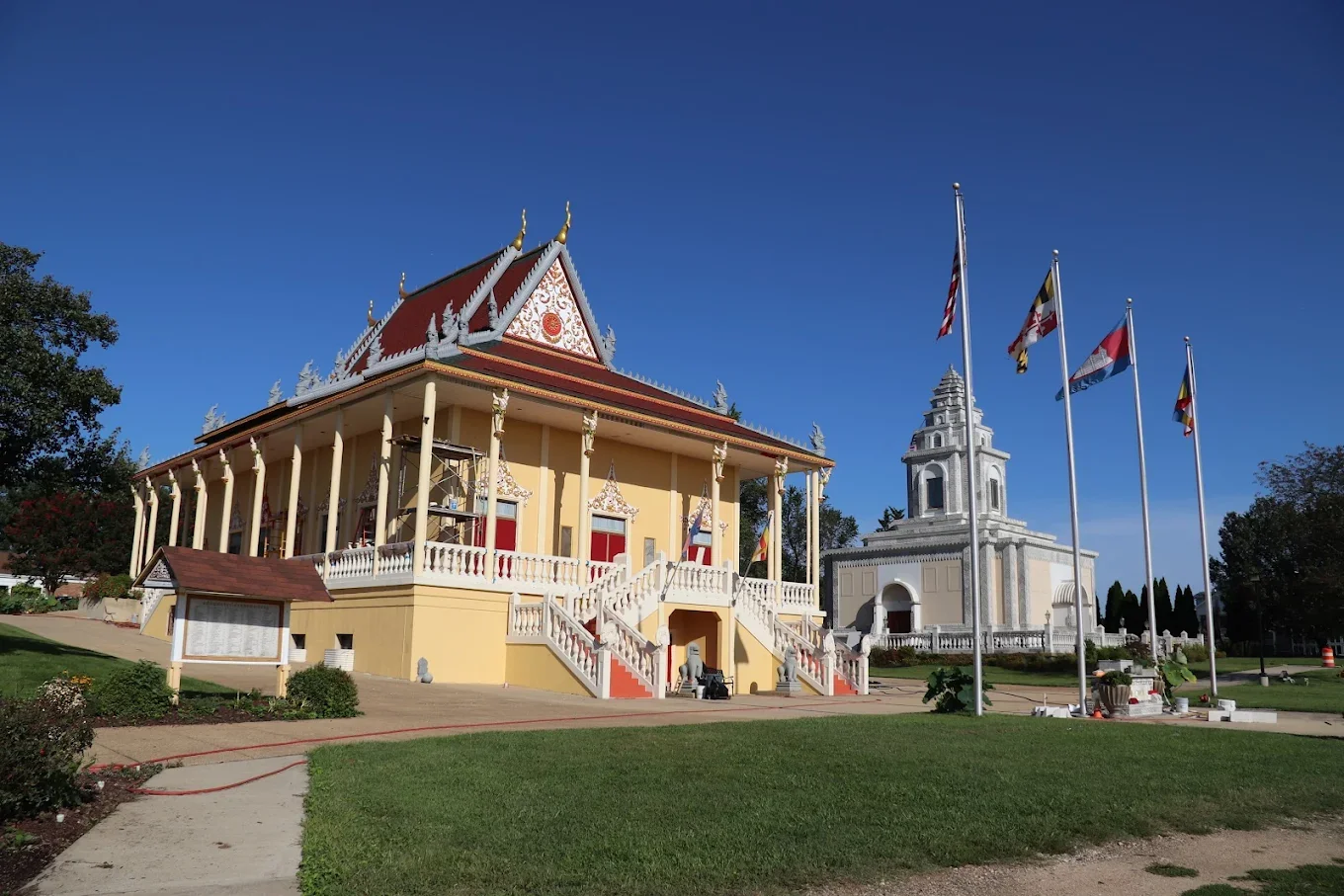
The diaspora is built along a spectrum. In Silver Spring, Maryland, just outside Washington, DC, stands a Vihear — the large central temple sanctuary — completed in 1991 as the first of its kind built outside of Cambodia. Designed by the renowned Cambodian architect Lok Ta Proeung Phung, who also shaped the Battambang cityscape, its stage was designed by resident monks and built and hand-painted by the community. Each May, its performers — dancers trained in traditional Khmer Apsara royal ballet, musicians playing traditional folk instruments — take that stage in recognition of AANHPI Heritage Month. Further out, in Minnesota and Georgia, diaspora communities have built temple complexes of significant scale — ornate gopura gateways, tiered rooflines, gilded prasat towers — announcing a Khmer presence in the American landscape with unmistakable clarity.
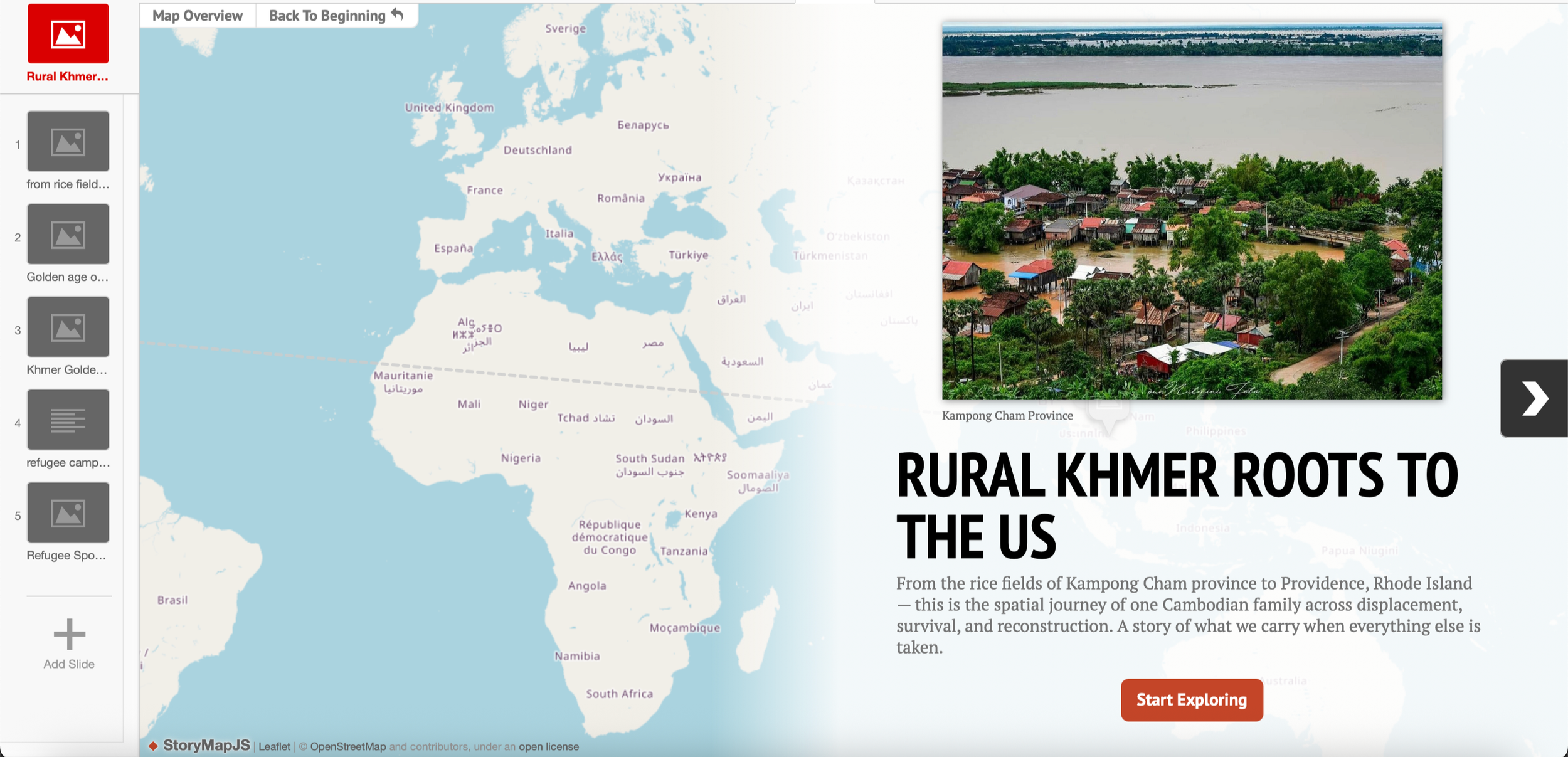
Screenshot of Knightlab Story Map
The monks who traveled with the diaspora carried more than faith. They carried spatial knowledge — the proportions of the vihear sanctuary, the logic of the threshold, the cardinal orientation of the sacred toward the east. Architecture migrates in the body before it migrates onto a site.
In April 2026, DC NOMA partnered with the Smithsonian’s National Museum of African American History and Culture for the Journeys in Genealogy workshop — an intimate session using the StoryMaps.dk platform to help participants build geographic narratives of their family histories. I attended to photograph the event, I was not prepared to be moved the way I was. Sitting with my laptop, I began placing my grandfather’s story on the map: Kampong Cham. Batheay. The Thai border, Texas, Providence, Utica, Providence again. Watching the line of a life trace itself across Southeast Asia and the United States made visible something I had felt but never fully articulated: that every point on that map is also a built environment encountered, survived, adapted to, or recreated.
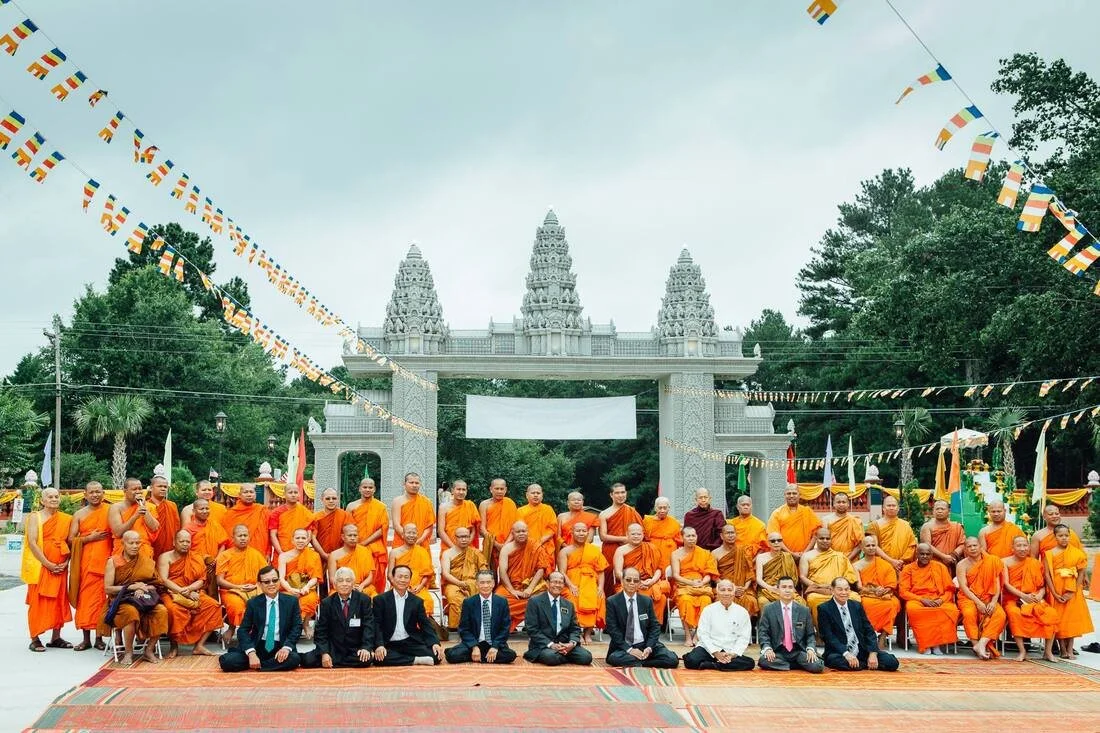
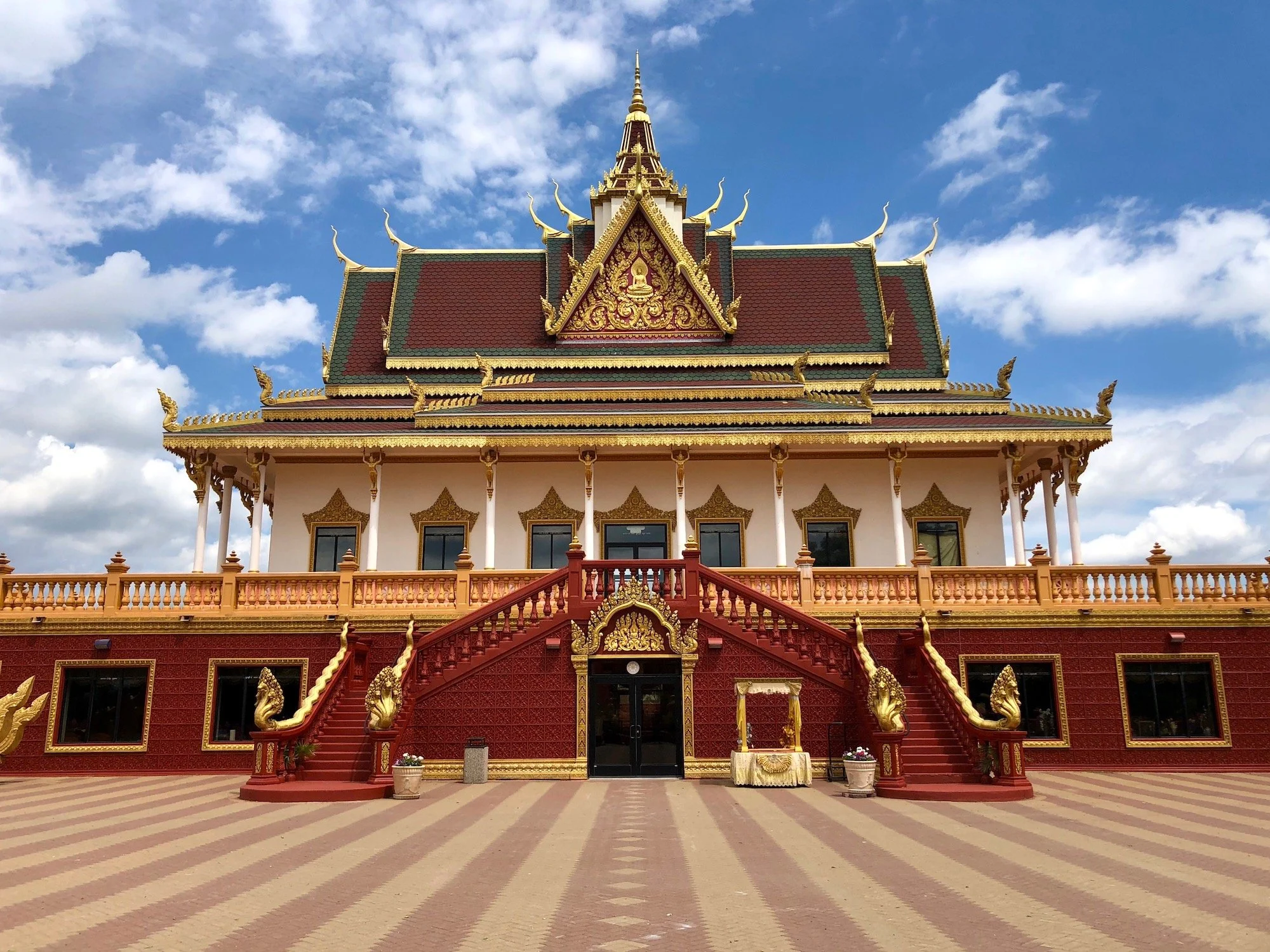
Southeast Asian architectural heritage — and Cambodian heritage specifically — remains largely invisible in American architectural discourse. It disappears twice: once under the broad “Asian American” umbrella, which flattens the diversity of Southeast Asian experience; and again because the buildings the diaspora constructed in America are seen as ethnic community spaces rather than architecture worthy of serious study. The Vihear in Silver Spring, the first Cambodian temple sanctuary built outside of Cambodia, does not appear in the architectural histories that shape how our profession understands itself. That is not a small omission. When a profession cannot see the built heritage of a community, it cannot serve that community well.
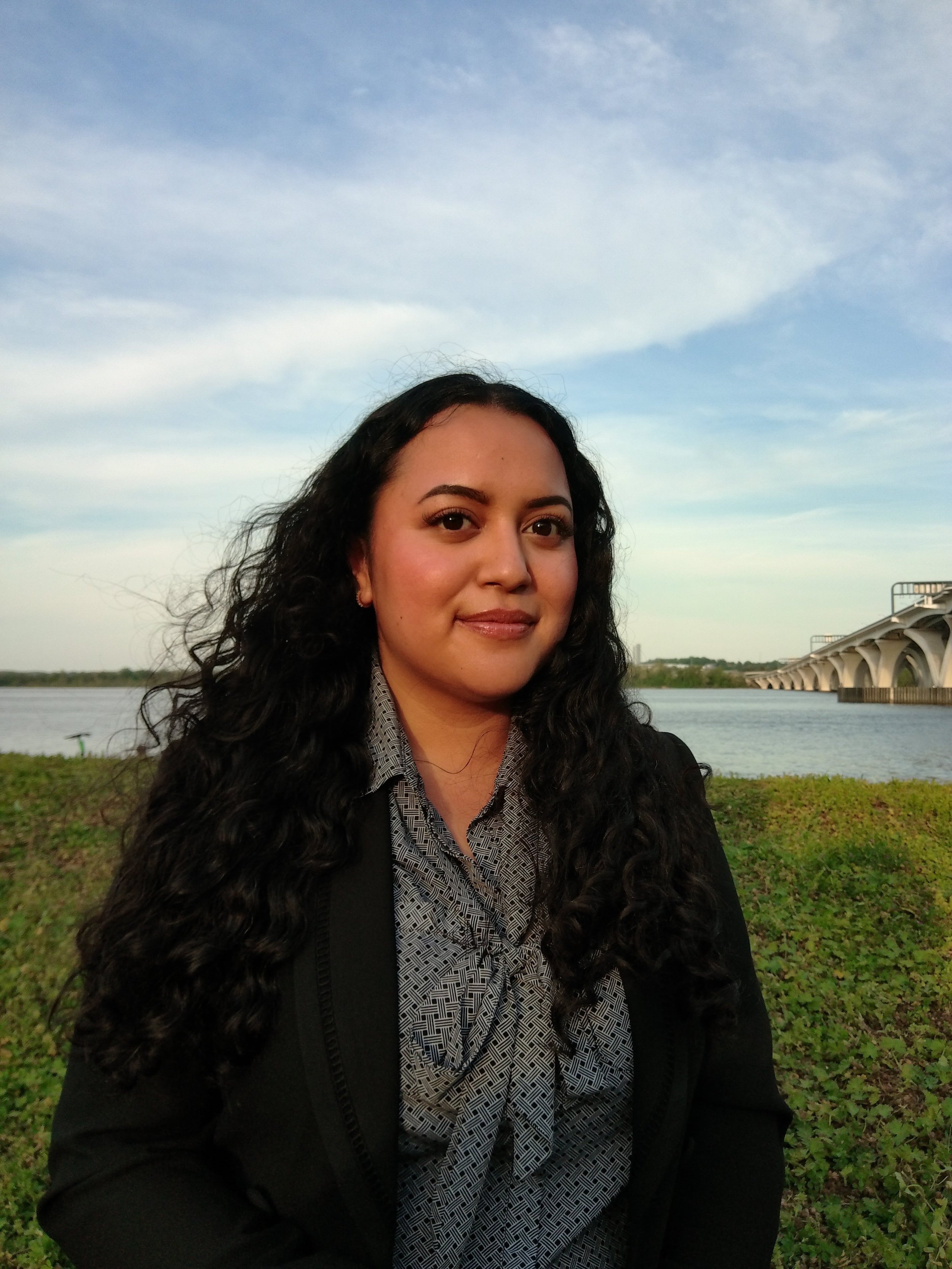
I am still learning. The research continues. The map keeps growing.
— Dasanie Chea Pena First-Generation Architectural Designer | Dominican-Cambodian American | DC NOMA Member
My grandfather was not an architect. But he understood something about space that took me years of formal education to begin to articulate: that the buildings we inhabit shape us, and that when we are forced to leave them behind, we do not leave empty-handed.
We carry the spaces with us. We rebuild them, imperfectly and beautifully, wherever we land.
For those of us who are first-generation college graduates from immigrant and refugee households — who grew up navigating multiple cultural inheritances, moving through spaces not designed with us in mind — our professional presence in architecture is itself a form of spatial reclamation. We bring knowledge the profession needs.
Images: Author’s personal photographs, 2024 Cambodia field research, Google Earth. Story map via StoryMaps.dk / KnightLab. Additional images courtesy of community sources and independent research.
