
Design Concept: Prisma Art gallery
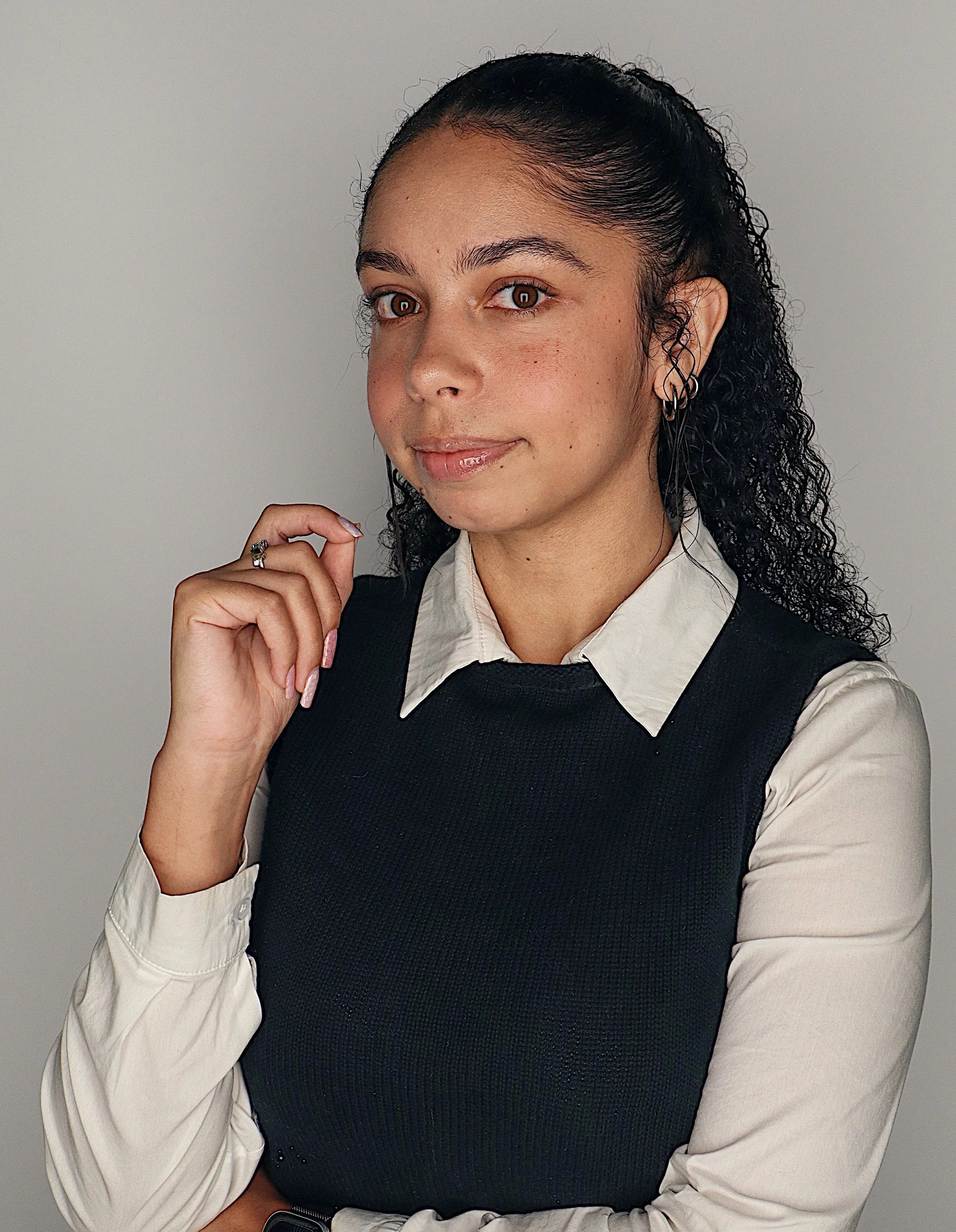
Photo: Isabella Reyes, Designer
In honor of Hispanic Heritage Month, one of our DC NOMA members had an amazing conversation with an emerging designer to learn more about her background and how it continues to influence her design decisions. Her name is Isabella Reyes, and here is what she had to say:
“As an Afro-Latina recent graduate of Florida A&M University (FAMU) who is currently based in the District of Columbia, my perspective on architecture has always been shaped by the different communities I have experienced. Growing up in a culturally vibrant Dominican, Puerto Rican, and Salvadorian household, I was brought up in a small town where cultural differences were not celebrated, and there was often an expectation to blend in or assimilate to feel like I belonged. Moving to Tallahassee, Florida and attending FAMU was a completely different experience for me. I was surrounded by people from many different backgrounds and cultures, and I discovered a community where I felt more comfortable embracing my own identity.
At the same time, Tallahassee showed me that diversity does not always equal automatic connection. Despite the various universities, cultures, and communities that made up the city, I noticed there were still visible divisions between them, both figurative and literal. The physical layout of Tallahassee, including railroad tracks dividing parts of the city and its communities, reflected how closely people could exist while still feeling disconnected from one another. But there was one similarity that stuck out to me about those groups of people -there was always a creative space that existed within each of their communities. From galleries at both FAMU and Florida State University showcasing student work, to independent galleries serving the larger Tallahassee community, there were always common creative spaces for people to gather.
That contrast influenced my approach when, for my fourth-year design project, I was tasked with designing a museum in Tallahassee. I saw the project as an opportunity to create an inclusive space that could bring those communities together, challenging the idea that people could only belong to one of them. This became my basis of design for the Prisma Art Gallery, which I envisioned as a cultural and creative hub for students, residents, artists, and visitors from across the city.
The concept of a prism was central to the design. Just as a prism refracts light and reveals a spectrum of individual colors, Prisma represents multiple identities coming together in one place, without losing what makes each of them distinct. That idea informed the building's faceted geometry, angular forms, and organization around a central core. Through galleries, gathering spaces, and connections between the interior and exterior, Prisma was designed to make art and community both visible and accessible. My design intent was for the gallery to act as a beacon within the city of Tallahassee, drawing people in from all backgrounds, toward a shared space that celebrates art, culture, and expression.
Since developing that design as a student, I have moved from Florida to continue my architectural career in the Washington, D.C. area. Here, I have been able to experience culture and representation within my own community on an even larger scale. Being surrounded by so many people from various ethnicities and backgrounds has reinforced how much it matters to see myself and my culture represented in the places where I choose to live. Collectively, as designers, it’s important that we provide spaces where culture, identity, and a sense of belonging can thrive, ensuring the people we design for feel seen, represented, and at home in the spaces we create for them.”
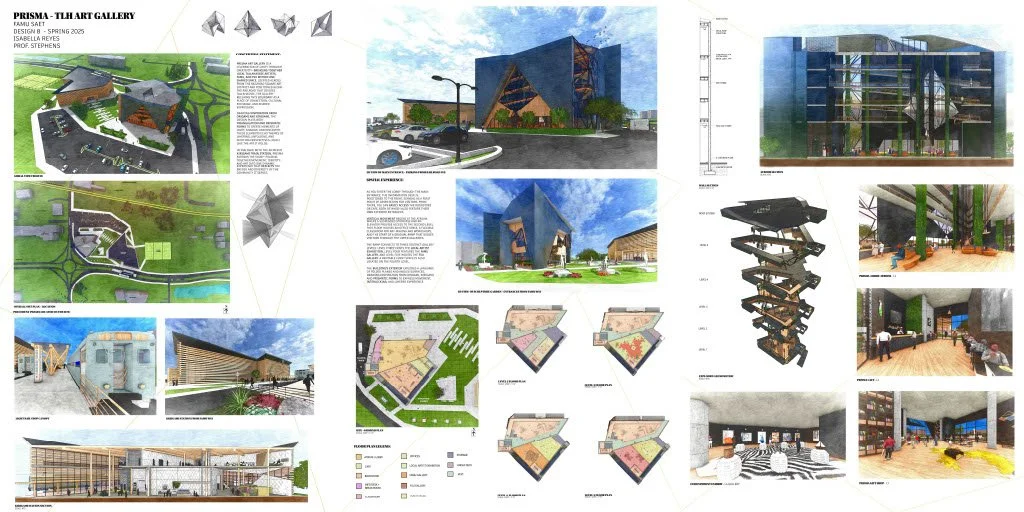
Image: Studio presentation boards developed by Isabella Reyes in Spring 2025.