
EASTERN SHOSHONE CULTURAL HUB
To Be Done Studio
CULTURAL / ARCHIVE / INDIGENOUS INFRASTRUCTURE
PROJECT OVERVIEW
A Cultural Anchor for Story, Memory, and Continuity
The Eastern Shoshone Cultural Hub + Repository is a long-envisioned project rooted in the ancestral homeland of the Eastern Shoshone people on the Wind River Reservation.
For over four decades, the community has sought a centralized space to preserve and share its cultural heritage—spanning more than 12,000 years. Today, archives, exhibits, and preservation efforts remain dispersed, limiting access and continuity.
This project brings those elements together into a unified cultural hub—housing archives, supporting storytelling, and creating space for gathering, education, and intergenerational exchange.
More than a building, it is a cultural infrastructure—one that ensures history is not only preserved, but actively lived and carried forward.
Rooted in land. Sustained by community. Built for future generations.
THE ARCHITECTURAL PROJECT
Building as Medicine. Building as Connector.
The design of the Eastern Shoshone Cultural Hub is shaped through deep community engagement and cultural understanding. Developed through the Citizens’ Institute on Rural Design (CIRD), the project reflects a collaborative process grounded in listening, dialogue, and respect.
Two guiding principles define the architectural vision:
Building as Medicine
The building is conceived as a space of healing—supporting cultural restoration, memory preservation, and community well-being. Drawing from the symbolism of the Shoshone rose, the architecture embeds meaning into its form, materiality, and experience.
Building as Connector
Inspired by the surrounding landscape of valleys and mountains, the building connects people across generations, linking past, present, and future. It becomes a bridge between stories, land, and identity.
The program includes:
Archival and research spaces
Public exhibitions and storytelling environments
Community gathering areas
Educational and cultural programming zones
Rather than imposing a design, the architecture emerges from place—responding to land, culture, and community input.
Architecture as relationship—between people, land, and memory.
ARTIST INTERPRETATION
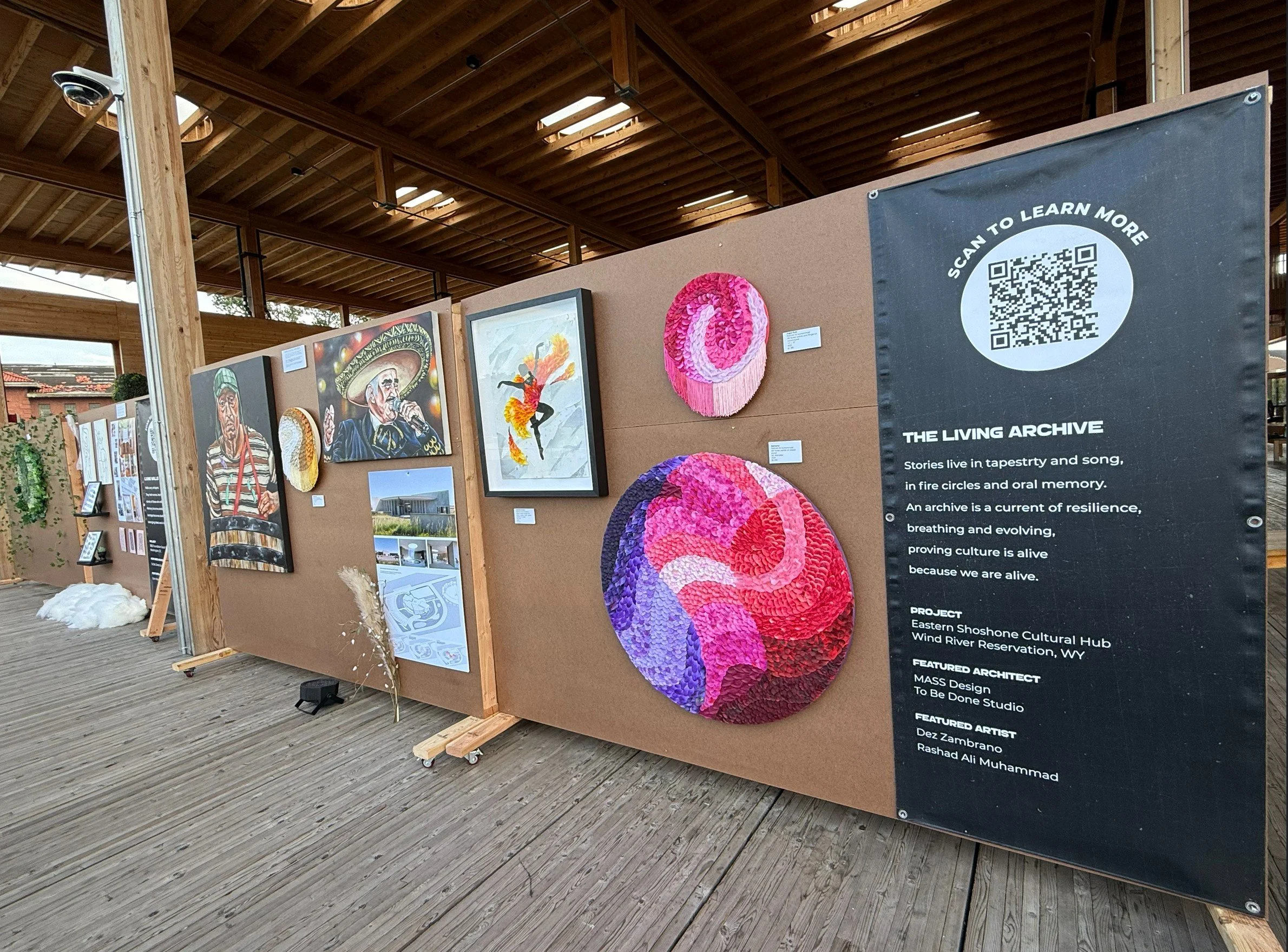
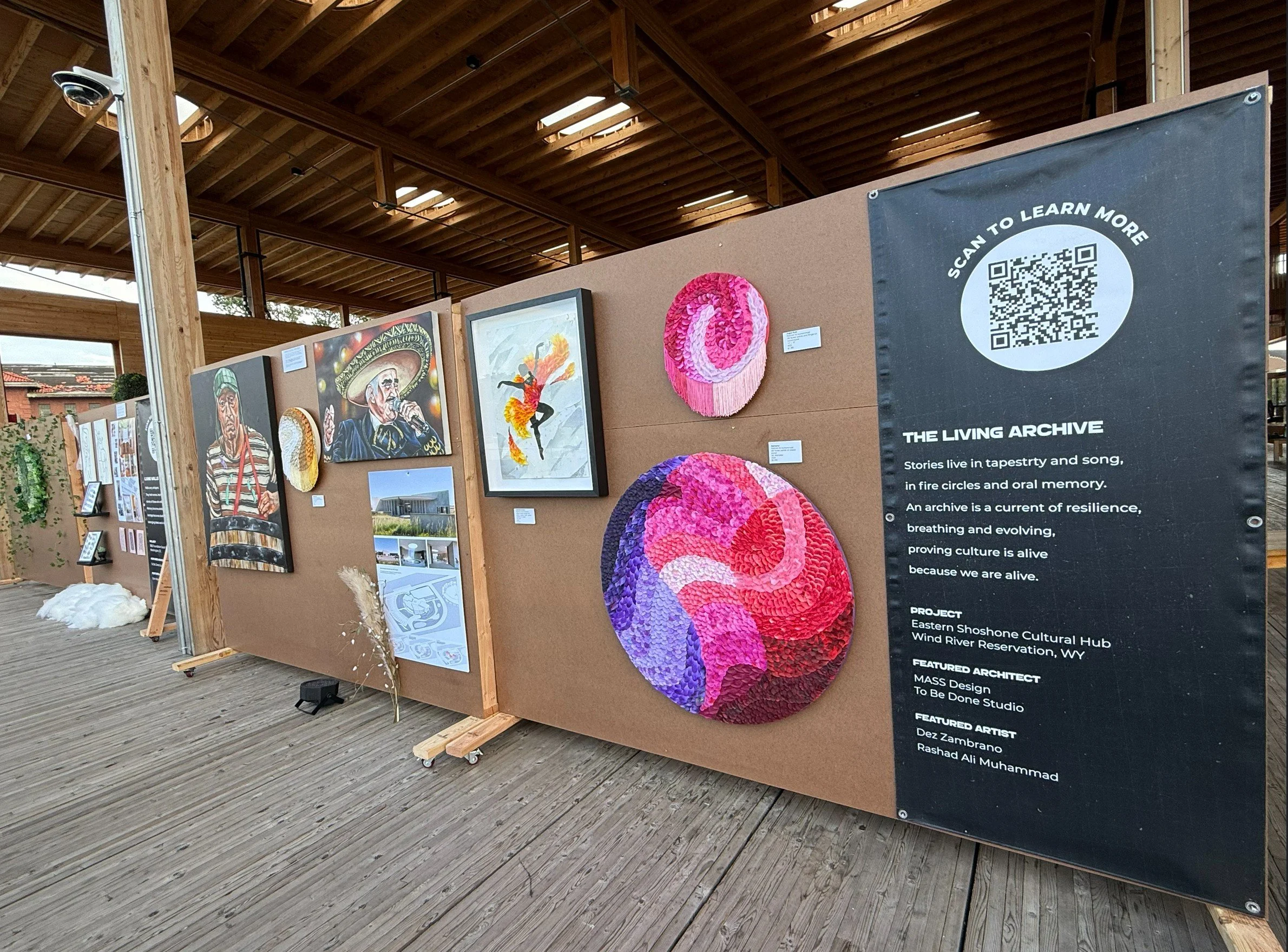
The Living Archive
The artistic interpretation expands the idea of an archive beyond objects and documents—reframing it as something living, tactile, and continuously evolving.
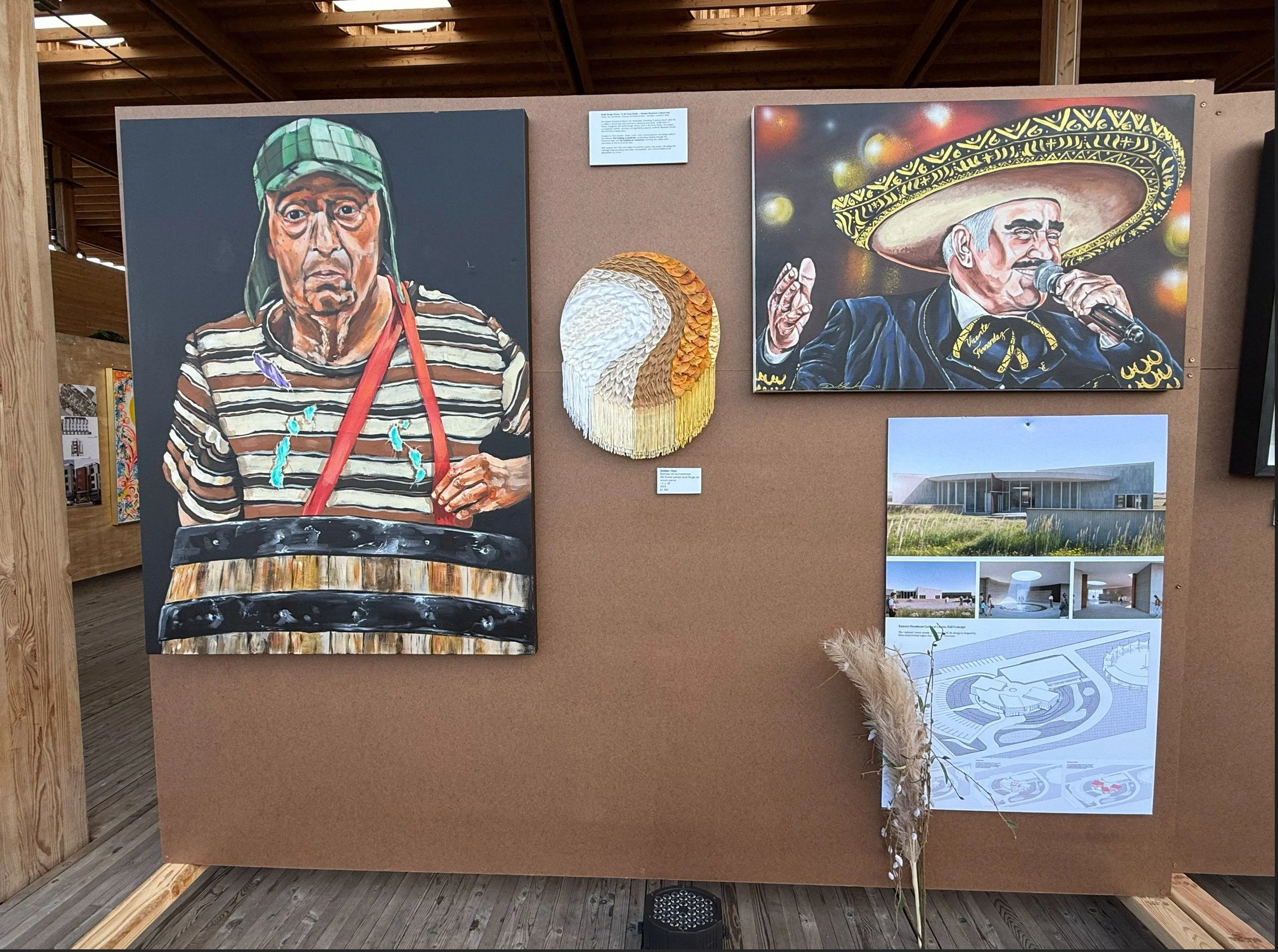
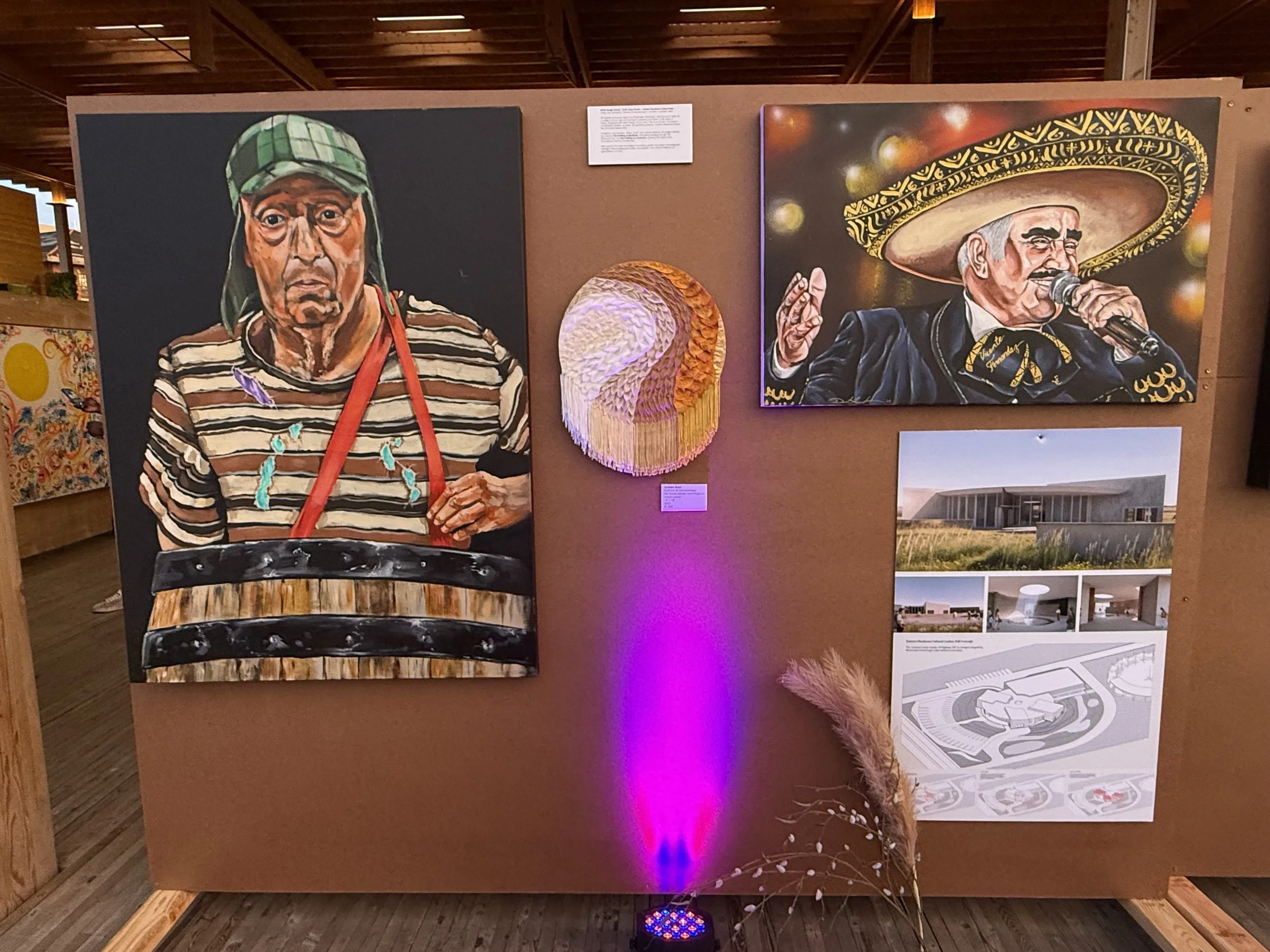
Dez Zambrano’s portrait work grounds the installation in human presence. His paintings capture figures that embody cultural continuity—individuals who carry identity, performance, and lived experience forward. These works anchor the archive in people, reminding us that history is not abstract—it is lived.
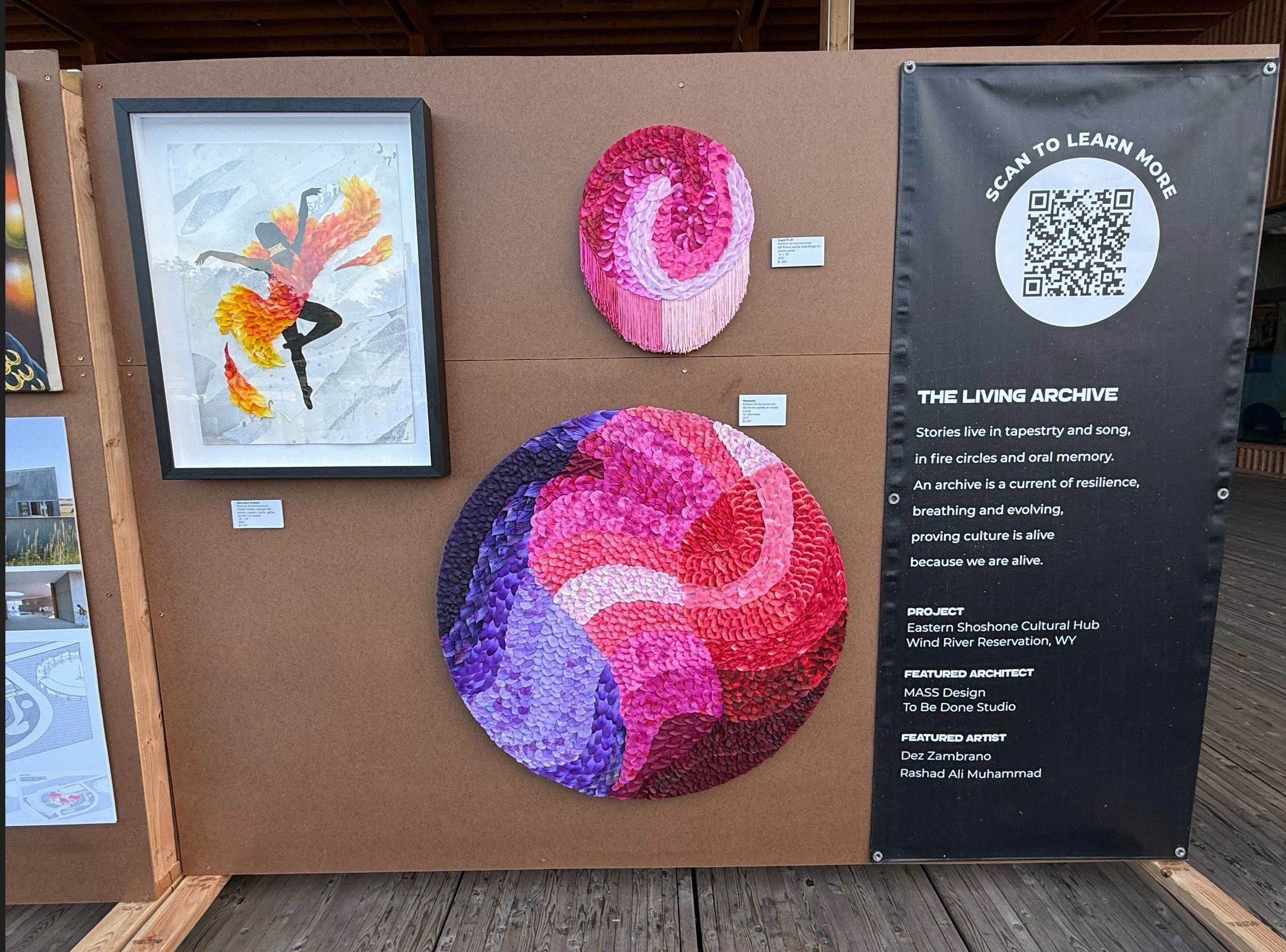
Rashad Ali Muhammad’s textile-based works introduce a complementary language of rhythm and material depth. Through layered fabric, gradients, and circular forms, his pieces evoke cycles of time, land formations, and cultural continuity. The tactile surfaces suggest that memory is built over time—layered, textured, and constantly evolving.
Together, their work redefines the archive as:
Human — carried through people
Material — expressed through texture and form
Dynamic — evolving rather than fixed
The result is an archive that is not stored—but experienced.
An archive that breathes.
A culture that continues.
THE COLLABORATION
Where Memory Becomes Material
The collaboration between architecture and art transforms the project into a spatial experience—one that mirrors the mission of the Cultural Hub itself.
The architectural vision calls for a centralized place of preservation, storytelling, and gathering. The artists extend that vision into physical form—translating it into material, color, and presence.
The installation reflects this alignment in three ways:
Archive as People
Portraiture centers identity and lived experience, reinforcing that archives are made of voices, stories, and individuals.
Archive as Layered History
The textile works embody accumulation—histories layered over time, interconnected and evolving rather than linear.
Archive as Environment
The overall composition—earth tones, natural textures, and spatial arrangement—creates an atmosphere rather than a display. It reflects the architectural intention of a place where culture is felt, not just observed.
Rather than illustrating the building, the artists extend its purpose—creating a sensory interpretation of what a cultural archive can be.
This is where architecture and art converge:
Not as separate disciplines, but as shared tools for preserving and carrying culture forward.
A living archive—held in space, material, and community.
Eastern Shoshone Cultural Hub
PROJECT DETAILS
Cultural / Archive / Community Infrastructure
FIRM
To Be Done Studio
ARTISTS
Dez Zambrano, Rashad Ali Muhammad

THEME
Land, Memory & Cultural Continuity
YEAR
2025