
Cycle House
Emotive Architecture
SUSTAINABILITY / URBAN MOBILITY HUB
PROJECT OVERVIEW
A Model for Sustainable, Community-Centered Living
Cycle House is a mixed-use, net zero energy development designed to redefine how housing, sustainability, and mobility intersect in Washington, DC. Located in the Truxton Circle neighborhood, the project transforms a vacant lot into a vibrant, community-serving space that supports both environmental responsibility and economic accessibility.
The 20,000-square-foot building includes 18 long-term affordable residential units for individuals earning 50–60% of the area median income, along with ground-floor retail that serves the surrounding neighborhood. Designed as a catalyst for revitalization along North Capitol Street, Cycle House demonstrates how thoughtful development can strengthen both community and infrastructure.
At its core, the project is a model for high-performance, sustainable living—where architecture not only reduces environmental impact, but actively contributes to a more equitable and connected urban future.
Where sustainability meets access. Where housing supports community.

THE ARCHITECTURAL PROJECT
Designing for Net Zero Living and Mobility
Cycle House is designed as Washington, DC’s first mixed-use net zero energy building—producing as much energy as it consumes annually through integrated renewable systems. The project incorporates rooftop solar panels, a solar canopy, and fuel cell technology to create a resilient, high-performance energy system capable of operating with minimal reliance on the grid.
The building’s design prioritizes sustainability at every level, including zero stormwater runoff, environmentally responsible materials, and a high-performance thermal envelope. Energy-efficient lighting, appliances, and systems further reduce consumption, reinforcing the project’s commitment to long-term environmental impact.
Beyond energy performance, the design integrates bicycle-friendly infrastructure and pedestrian-focused planning, encouraging alternative modes of transportation and reducing the building’s overall footprint. The layout concept—central to the project’s name—supports ease of cycling for residents, reinforcing mobility as a core part of daily life.
Architecture as a system—powering sustainability, access, and movement.
ARTIST INTERPRETATION
Powered by the People
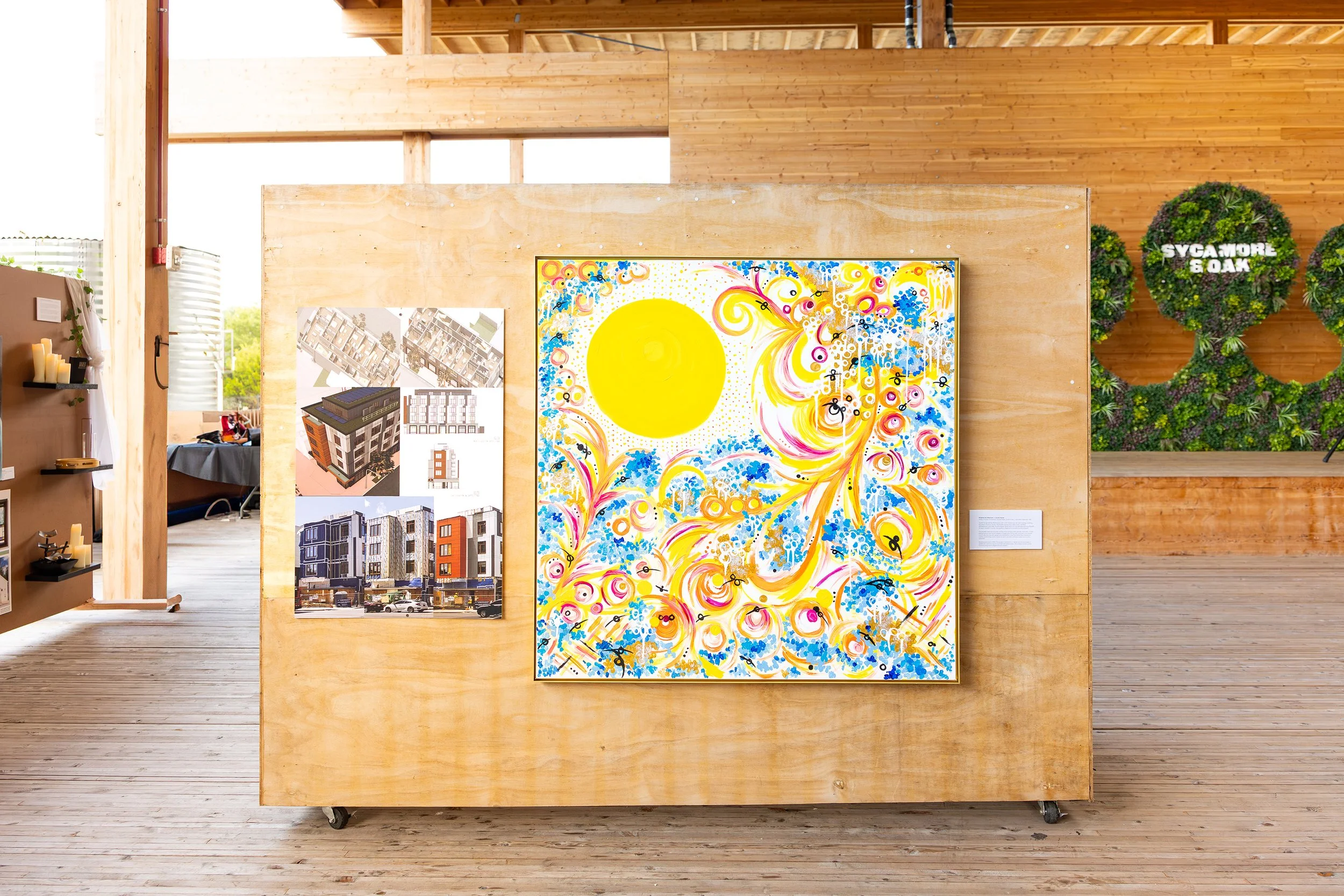
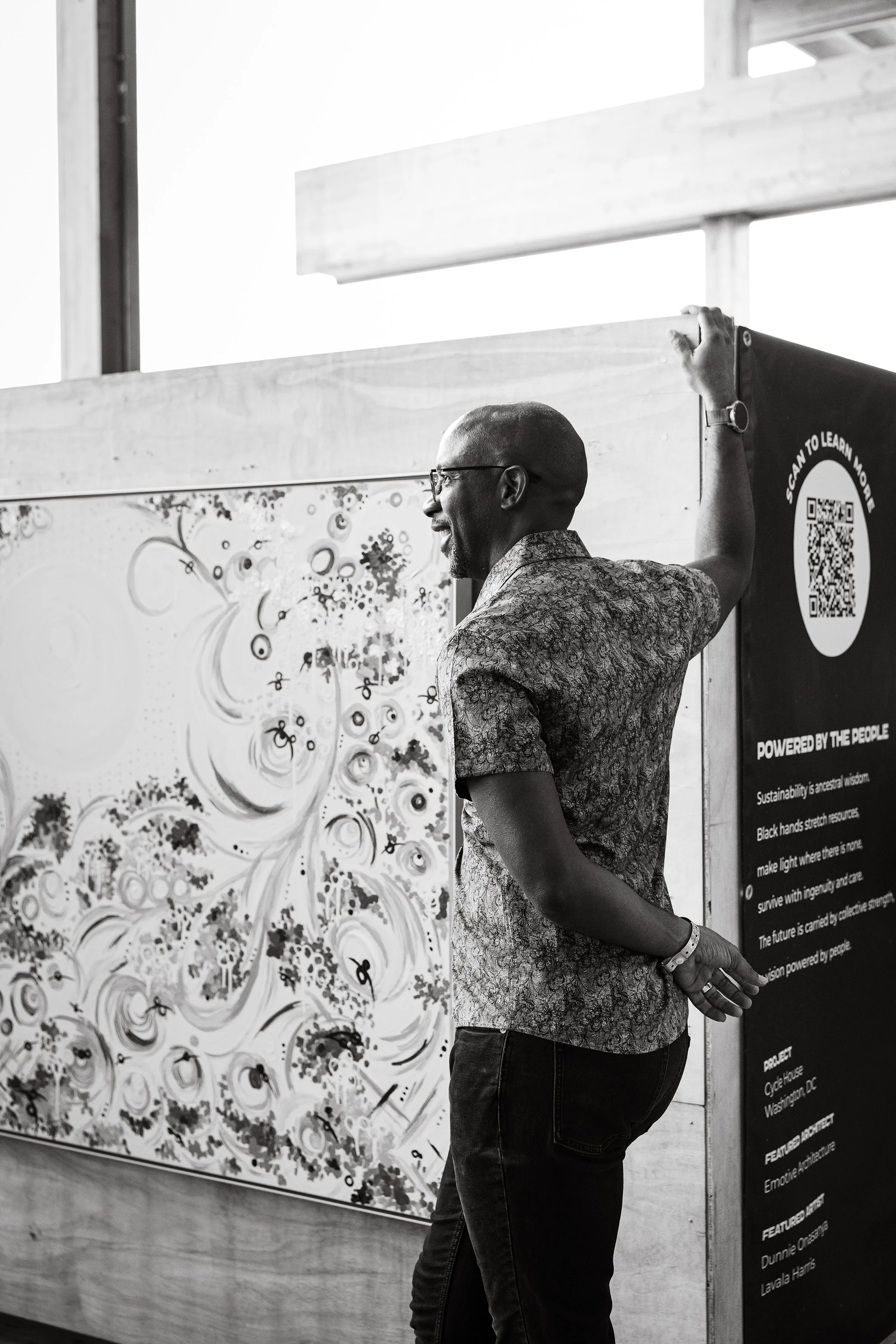
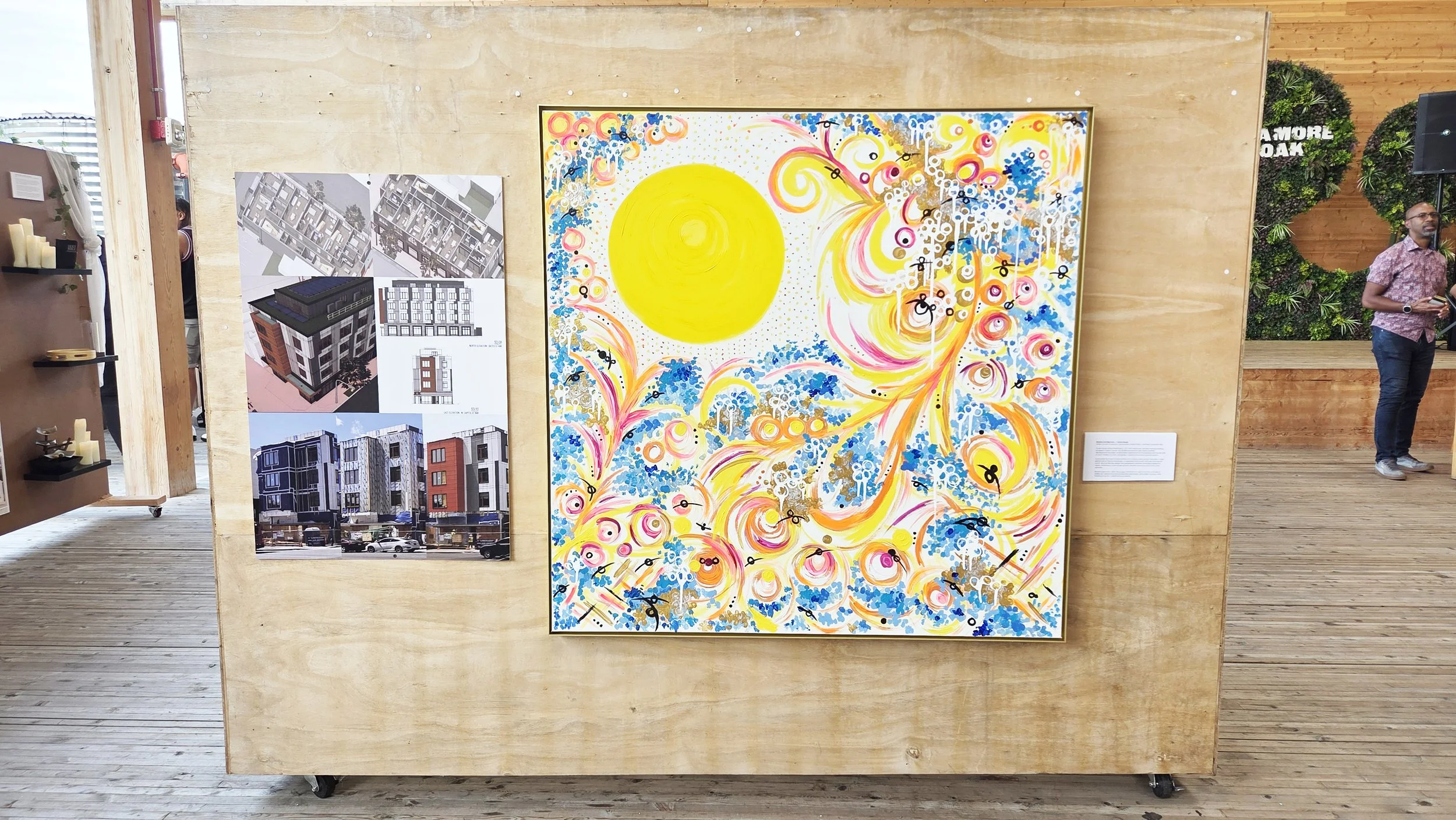
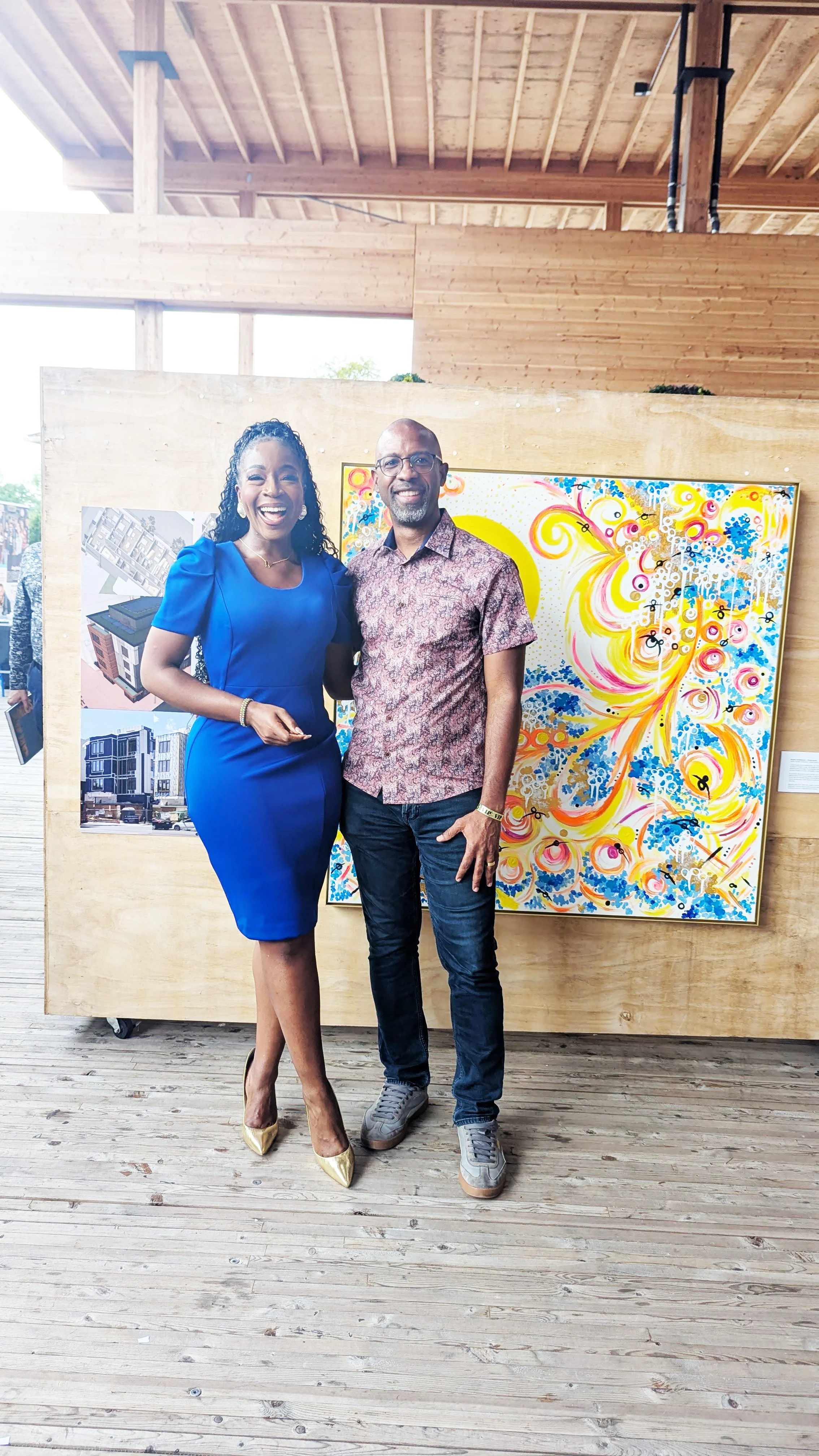
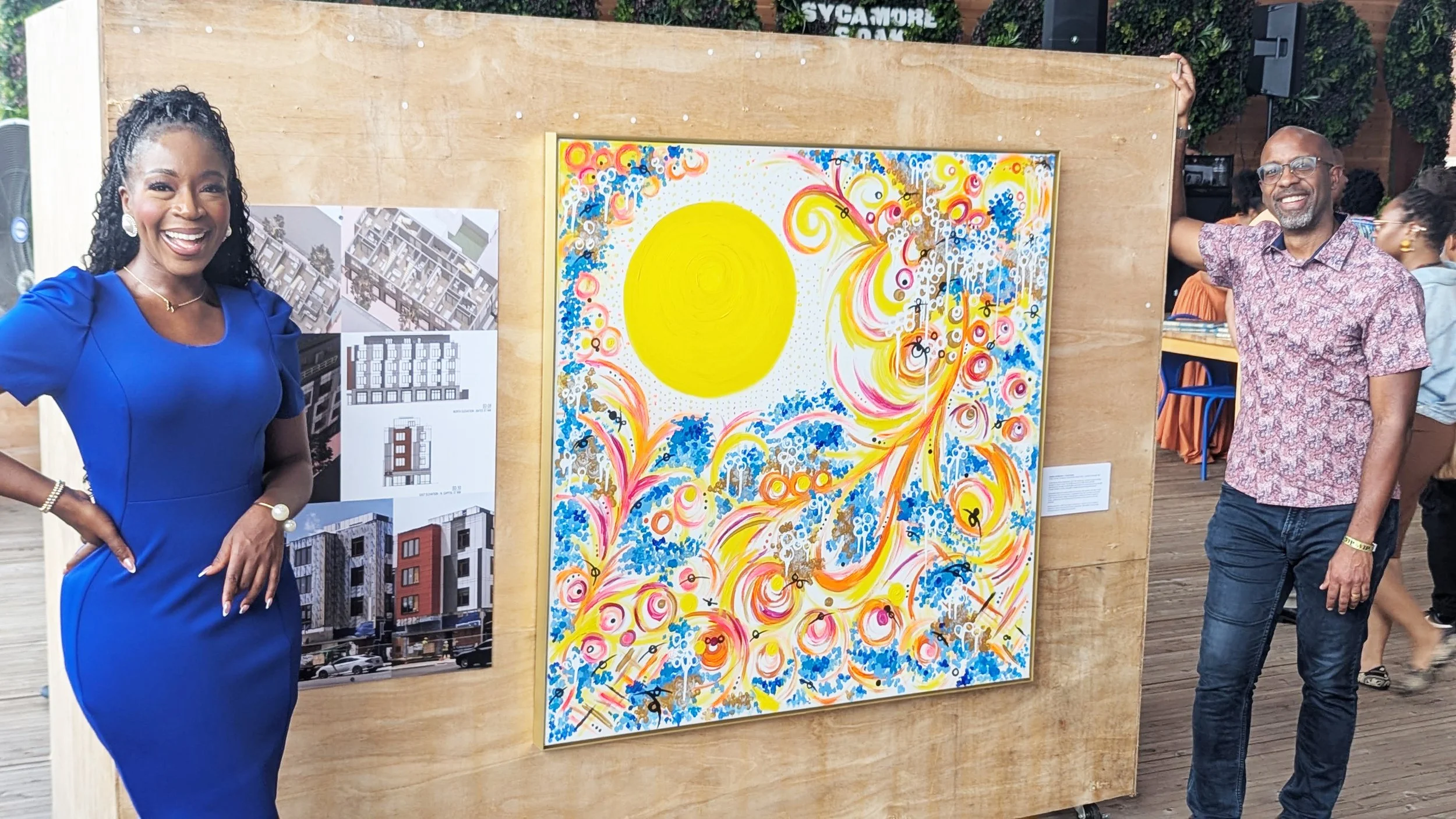
“Powered by the People” explores the intersection of mobility, sustainability, and collective action—bringing to life a vision of cities shaped by community-driven energy and equitable access.
Through bold visuals and layered storytelling, the installation reflects a future where transportation systems are not only efficient, but shared, inclusive, and environmentally responsible. Inspired by cycling culture and renewable energy, the work highlights how individuals and communities play an active role in shaping sustainable urban environments.
The integration of vibrant imagery, movement, and symbolic references reinforces the idea that the future of mobility is not imposed—it is built collectively.
Move together.
Sustain together.
Power the future.
THE COLLABORATION
Where Architecture and Art Intersect
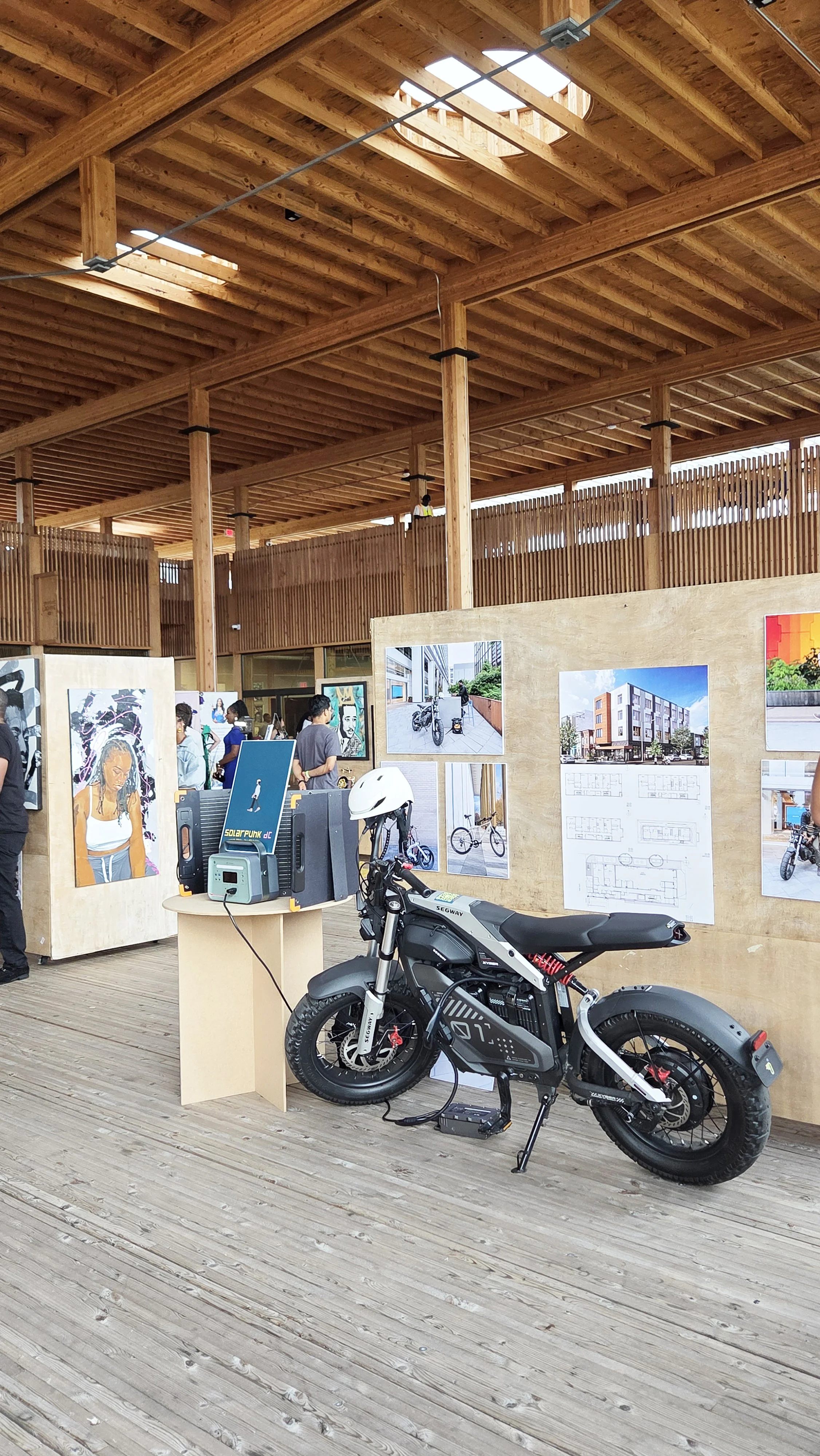
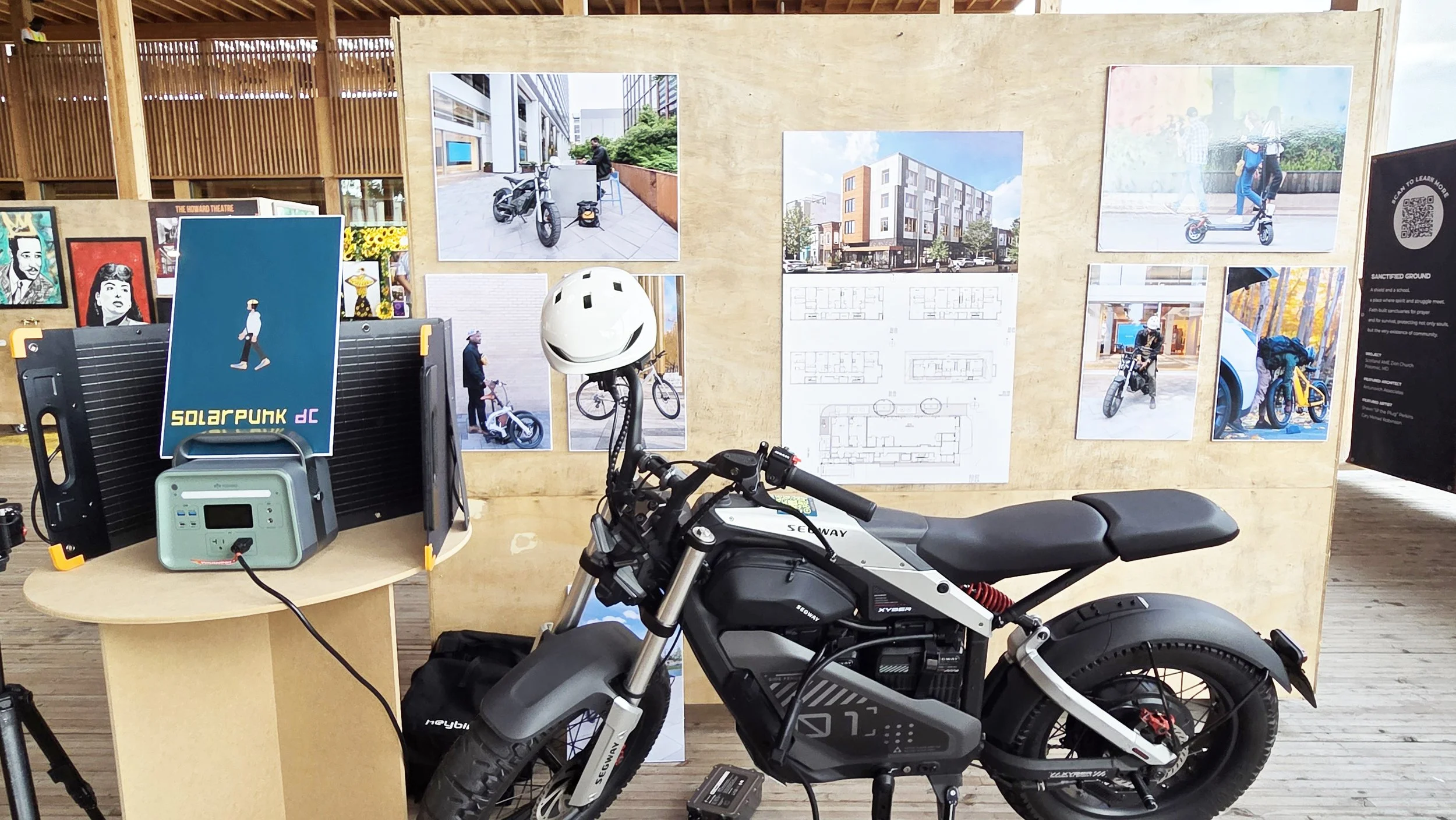
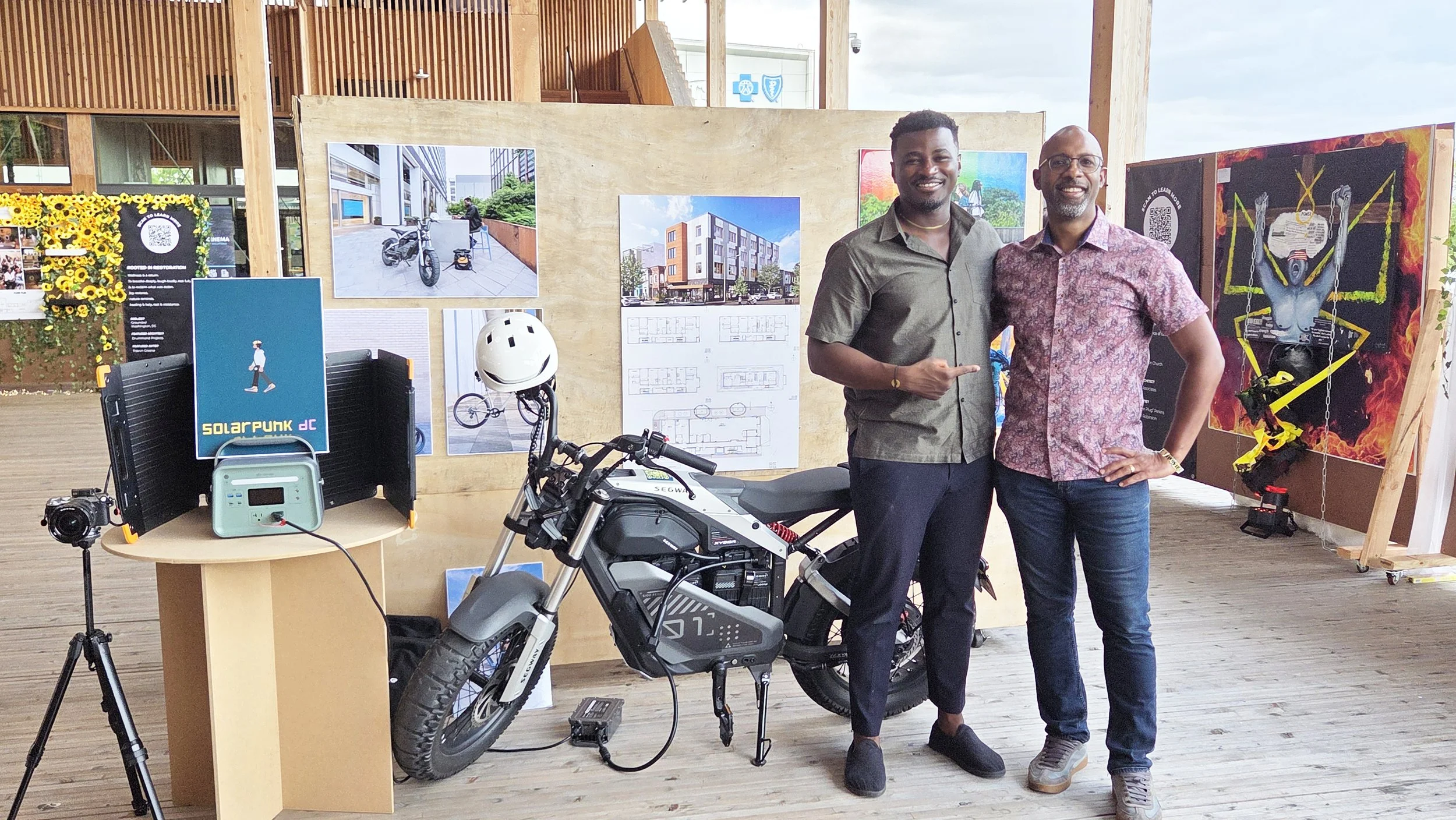
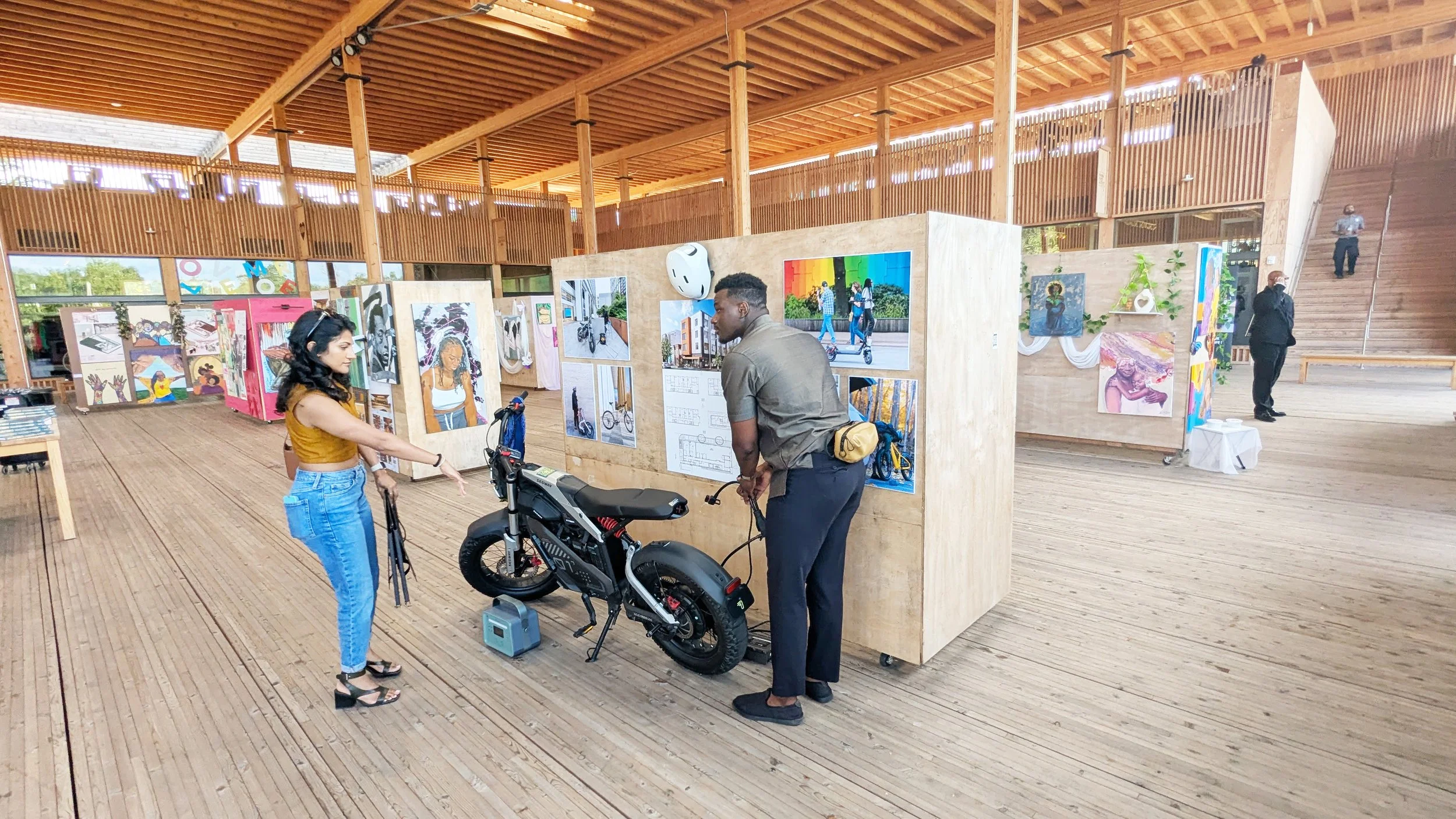
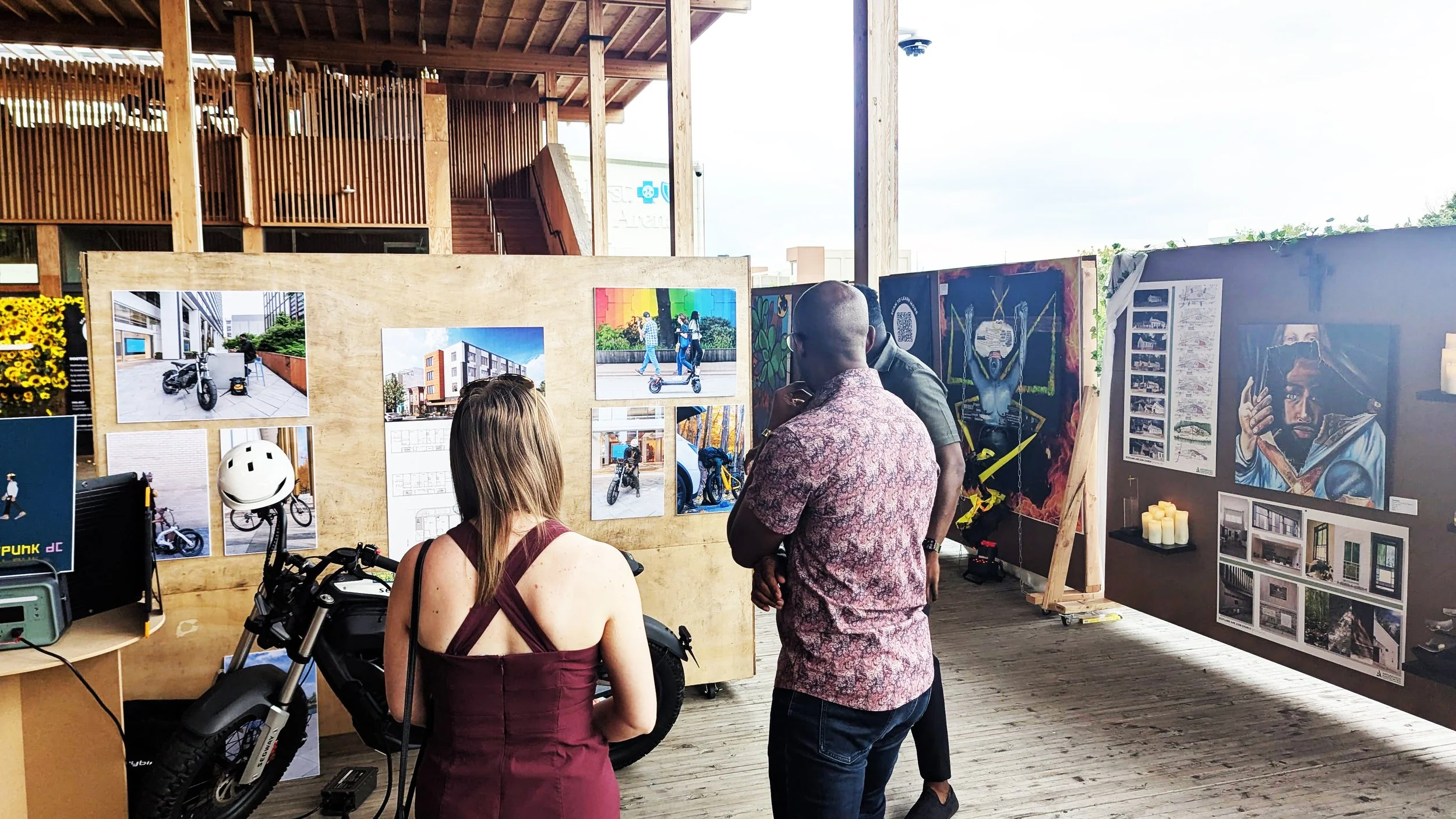
The collaboration between Emotive Architecture and artists Dunnie Onasanya and Lavala Harris translates Cycle House from a high-performance building into a lived, visual experience. Through the integration of architectural design, mobility infrastructure, and artistic expression, the installation makes the project’s vision tangible.
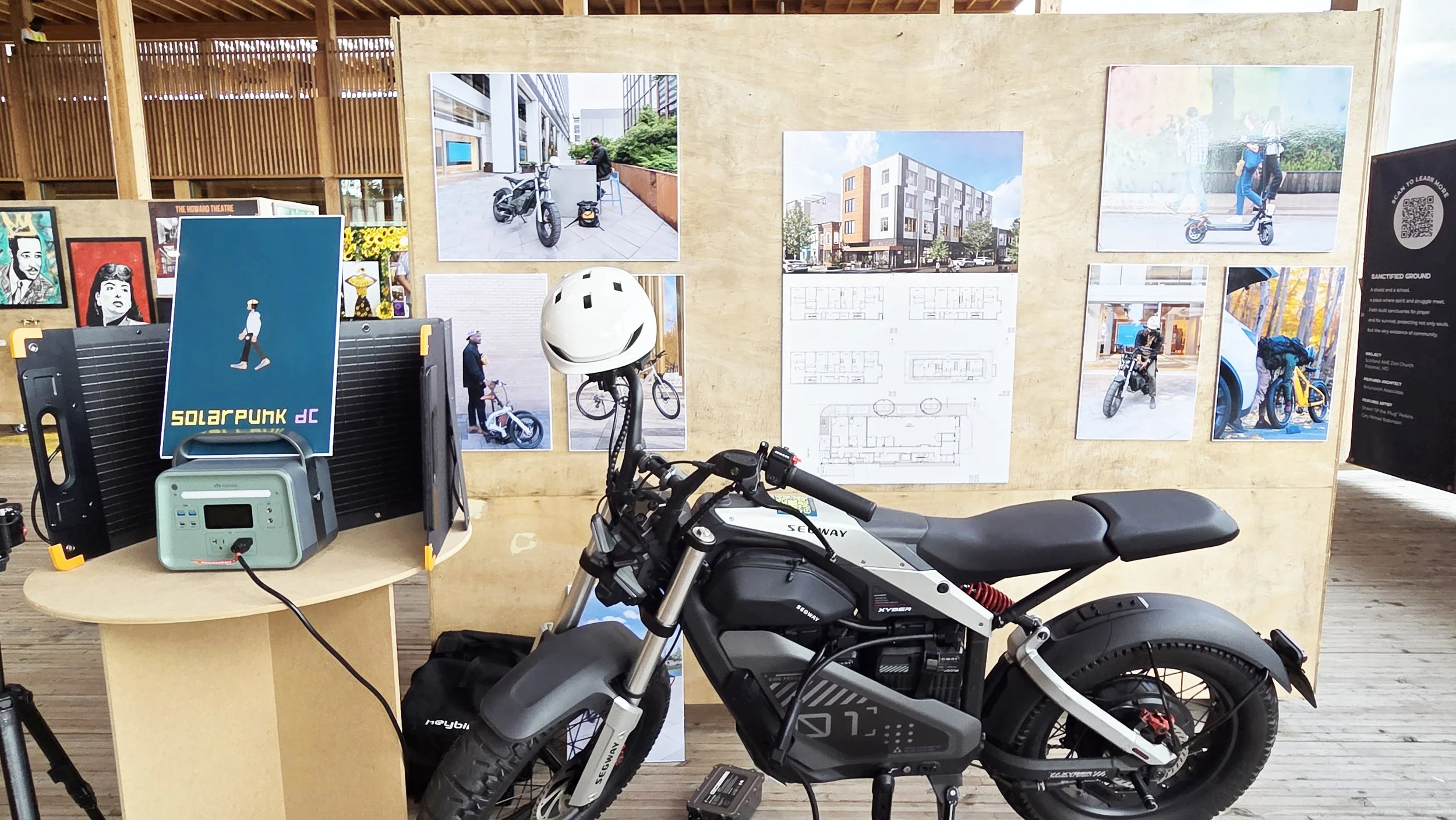
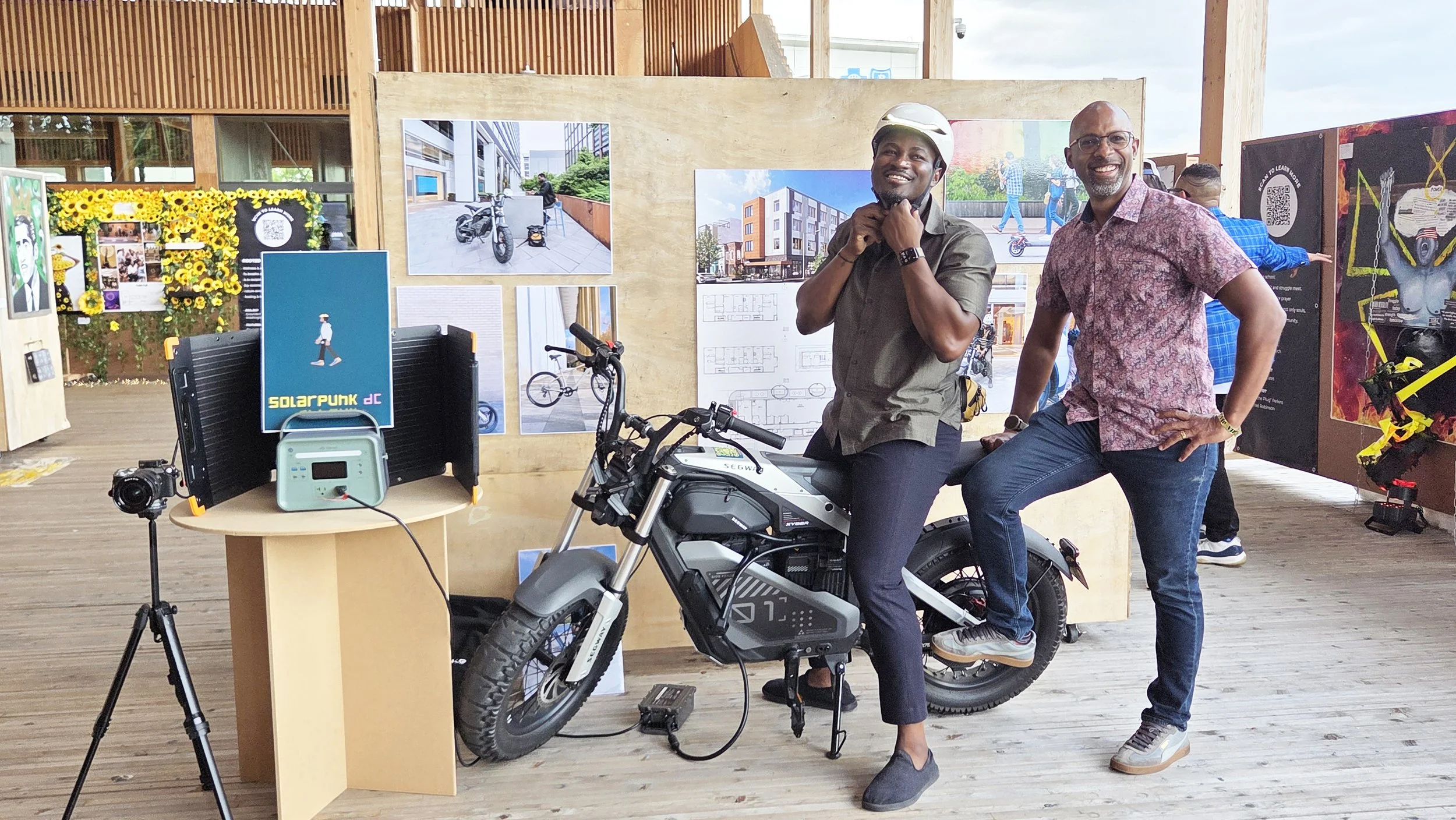
The inclusion of bicycles, solar-powered systems, and real-world components reflects the building’s commitment to net zero energy and sustainable transportation. Surrounding architectural drawings and renderings ground the installation in reality, illustrating how these systems operate within a fully realized building.
Human interaction becomes central to the experience—highlighting that sustainability is not just about systems, but about people. The collaboration bridges concept and implementation, showing how design can directly shape more equitable, connected, and environmentally responsible communities.
A shared vision—powered by people, activated through design.
Cycle House
PROJECT DETAILS
Mixed-Use Net Zero Energy Residential + Retail
FIRM
Emotive Architecture
ARTISTS
Dunnie Onasanya. Lavala Harris (Solar Punk)

THEME
Net Zero Living & Community Mobility
YEAR
2025